Business entrances
Offices, plants, clinics and hotels use a monument to mark the driveway and carry the street address. A lit cabinet keeps the name readable for guests arriving after dark.
Monument signs · Dallas Fort Worth
A monument sign stands where people turn in, at eye level and on its own foundation. Masonry-style, fabricated aluminum or illuminated, we take each one from design and engineering through permits, fabrication and installation, for properties across Dallas Fort Worth.
A monument sign is a low, freestanding sign set on a solid base at ground level, usually beside a driveway or entrance. Instead of standing on exposed poles, the sign face sits on a masonry or fabricated structure that reads as part of the property. Monument signs can be illuminated, carry tenant panels and match the materials of the building behind them.
Where they work
A monument sits at the point of arrival. That makes it the natural choice wherever the turn-in, the address and the first impression all happen in the same few feet.
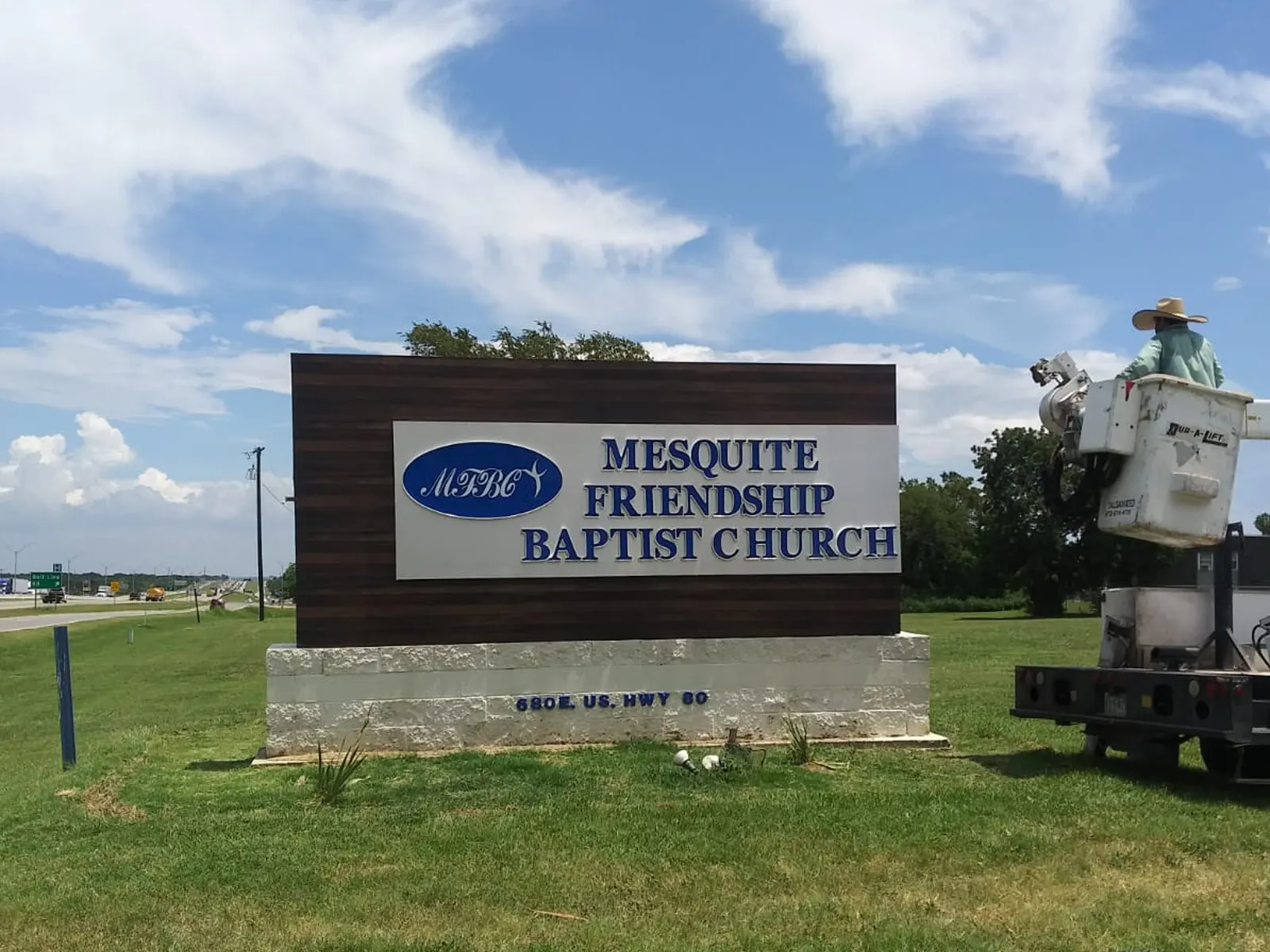
Offices, plants, clinics and hotels use a monument to mark the driveway and carry the street address. A lit cabinet keeps the name readable for guests arriving after dark.
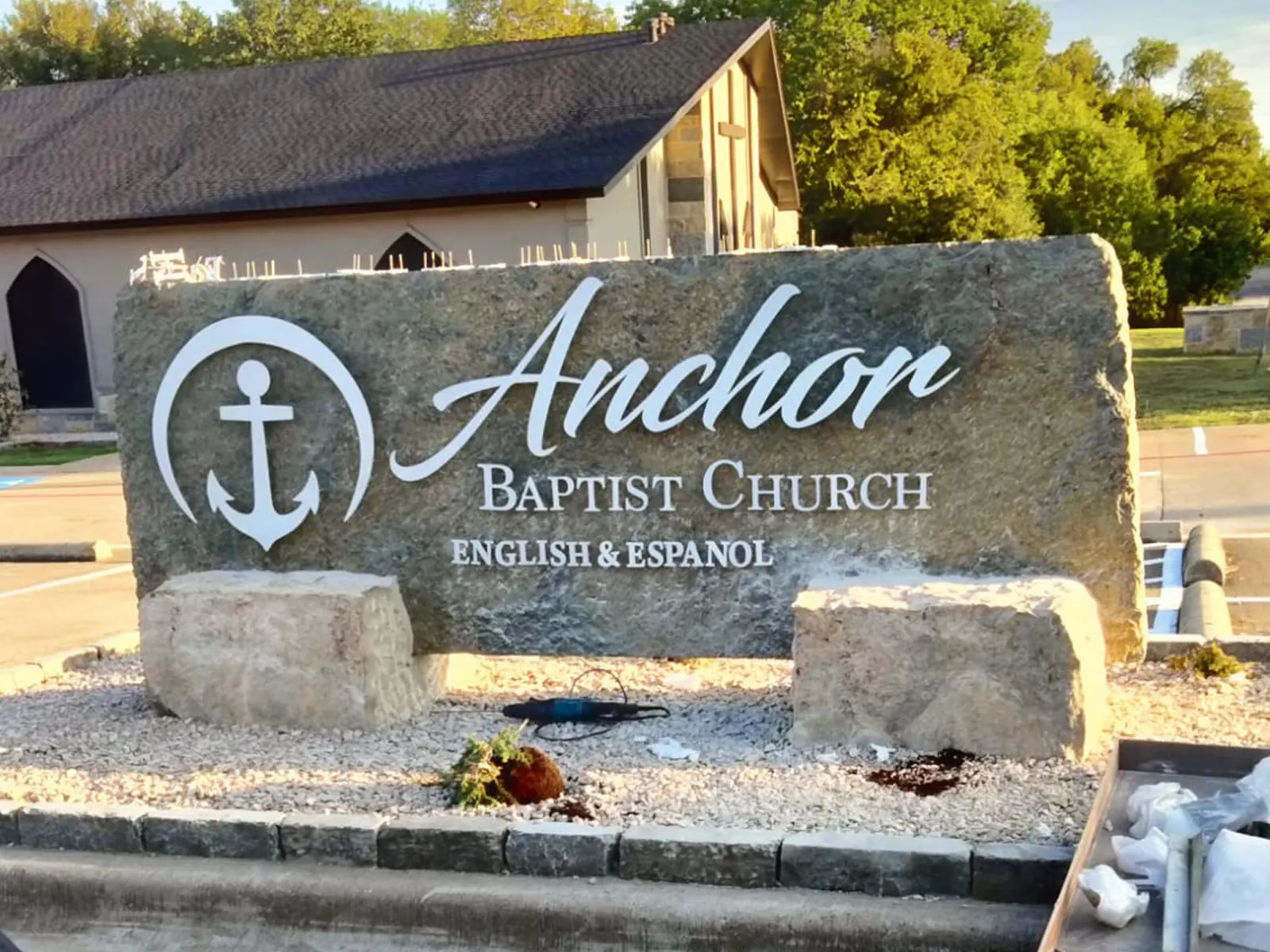
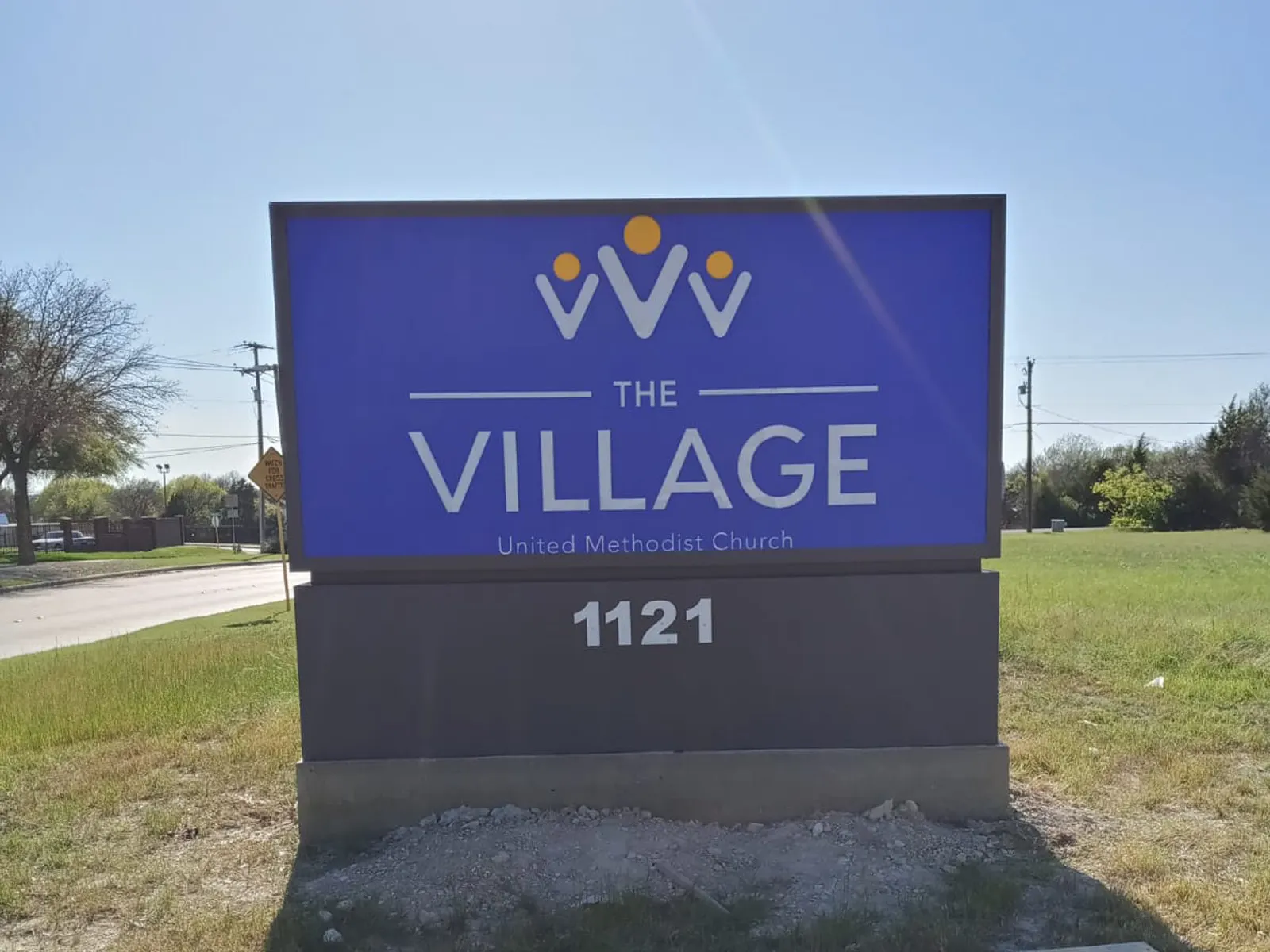
A roadside monument names the church at the drive, and can share its face with a preschool or ministry on the same campus.
Explore churches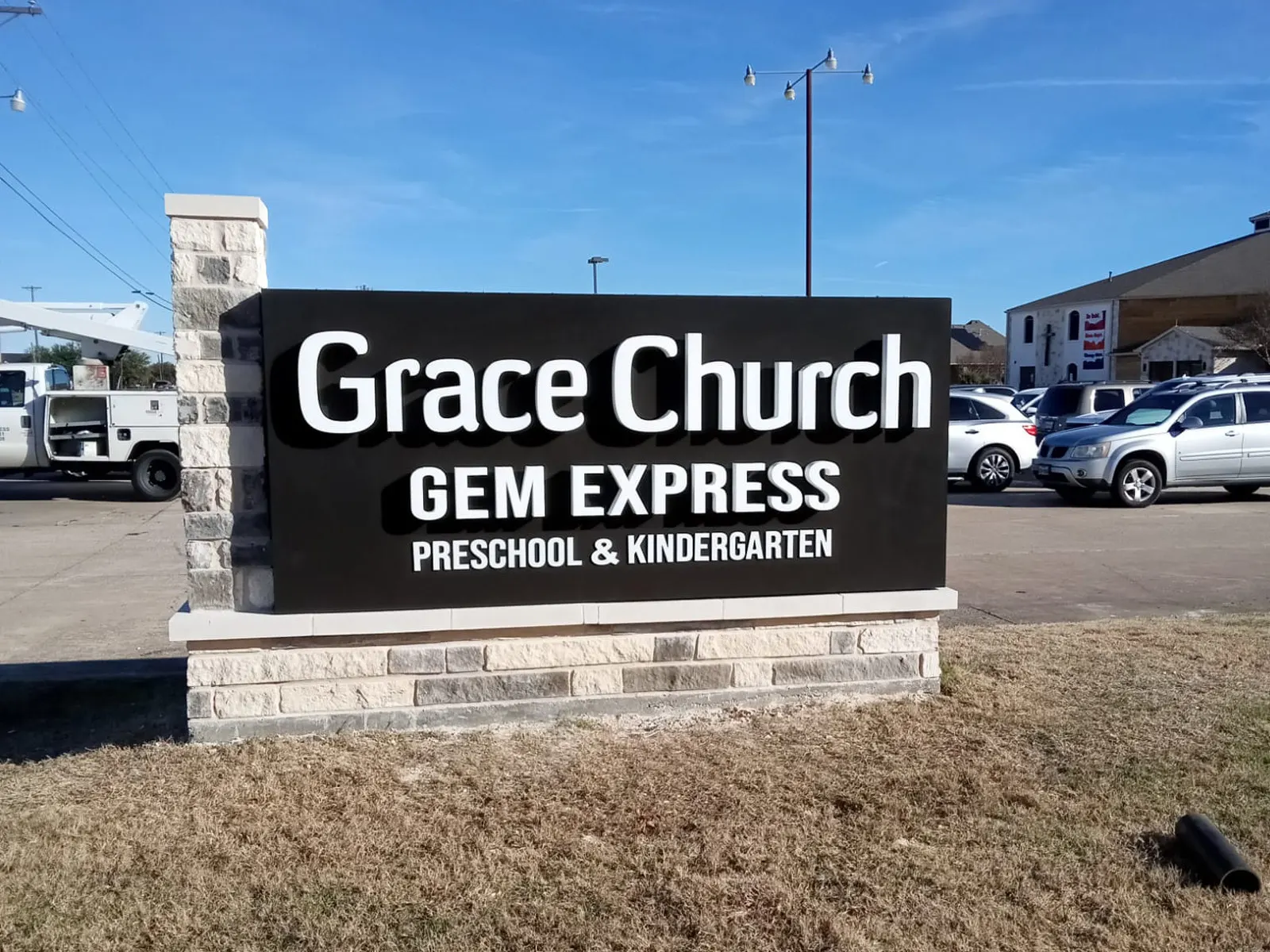
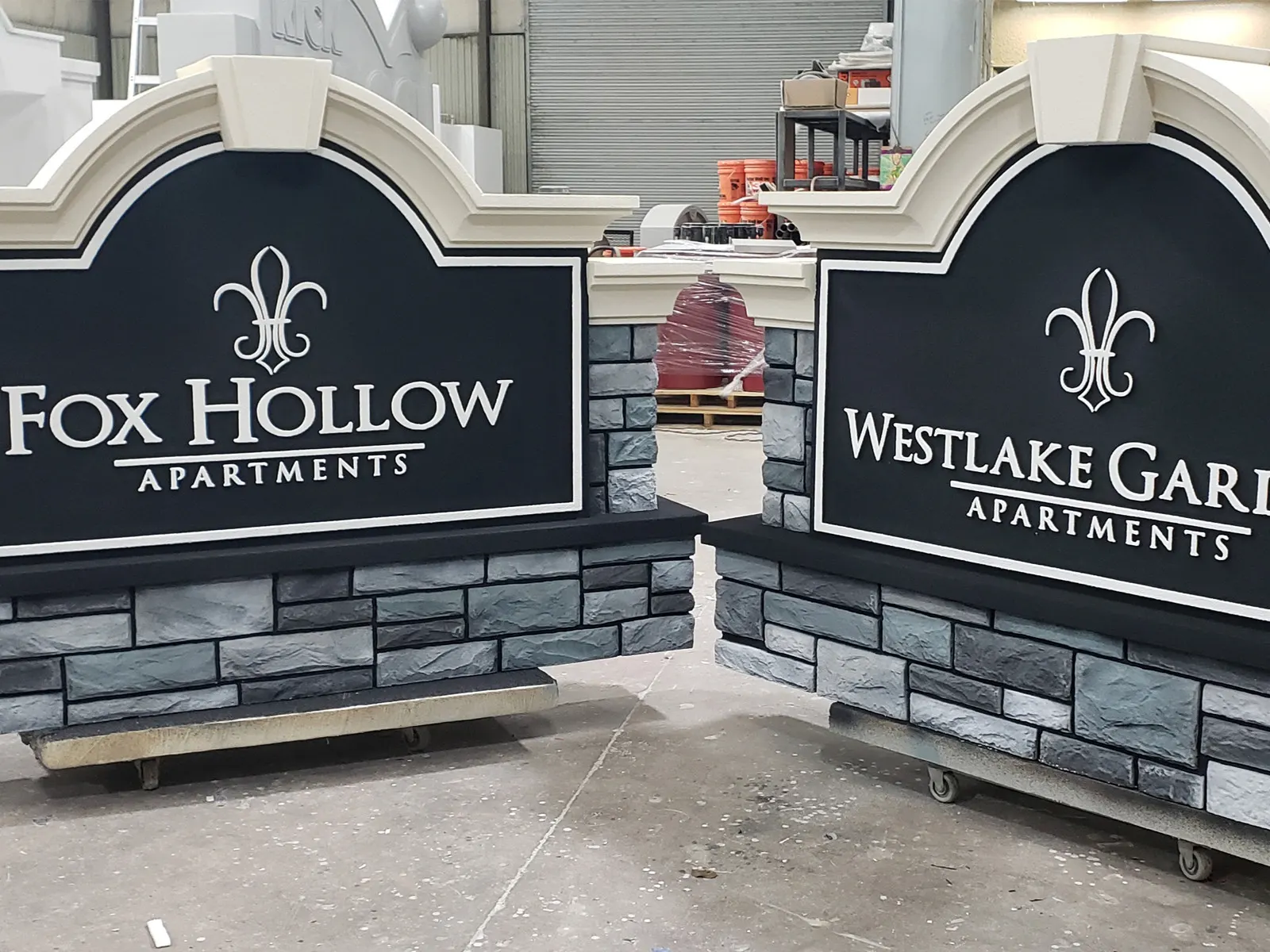
Entrance walls and matching monuments give a neighborhood or apartment community a front door. A set of signs can tie several properties into one recognizable portfolio.
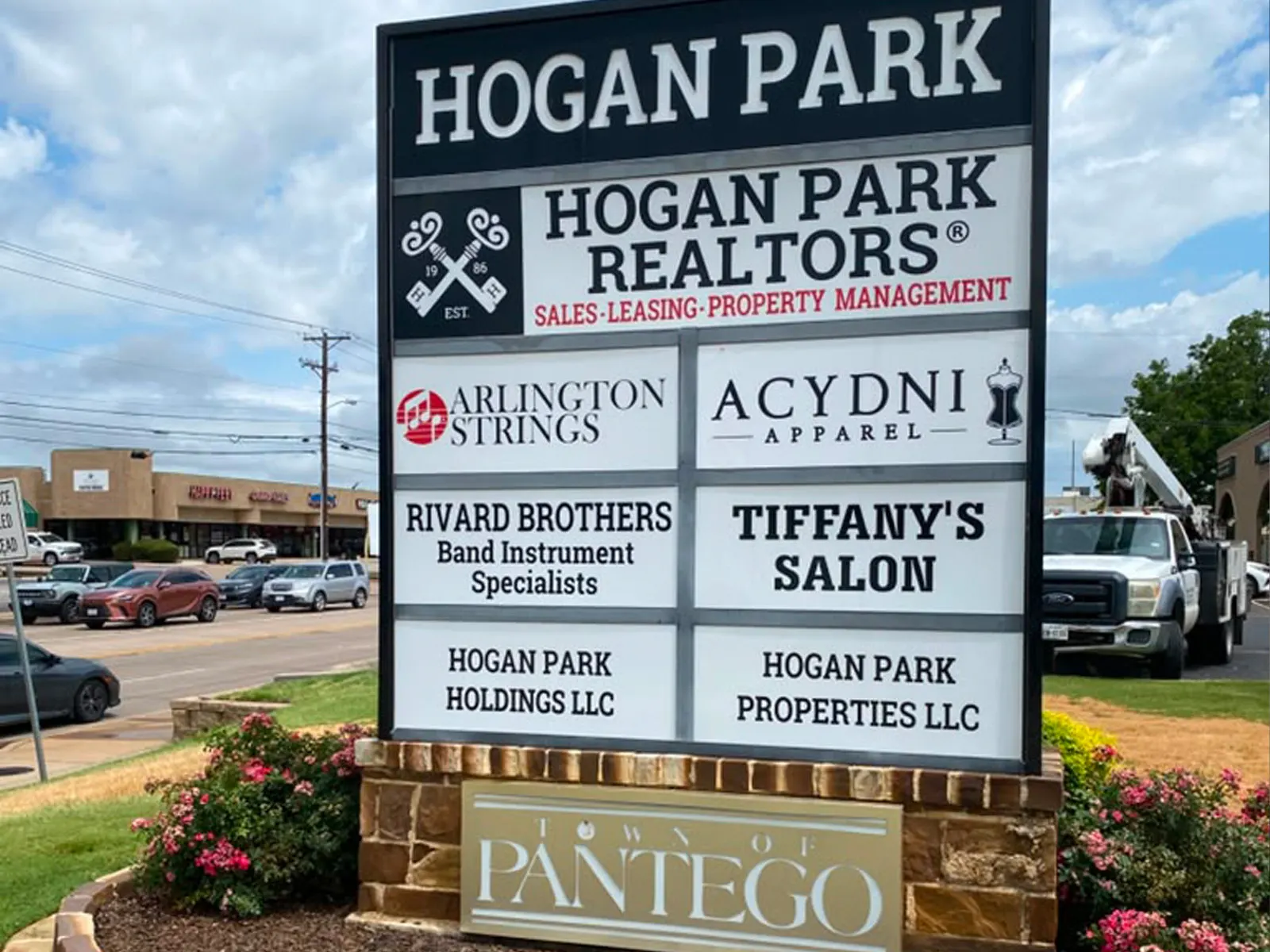
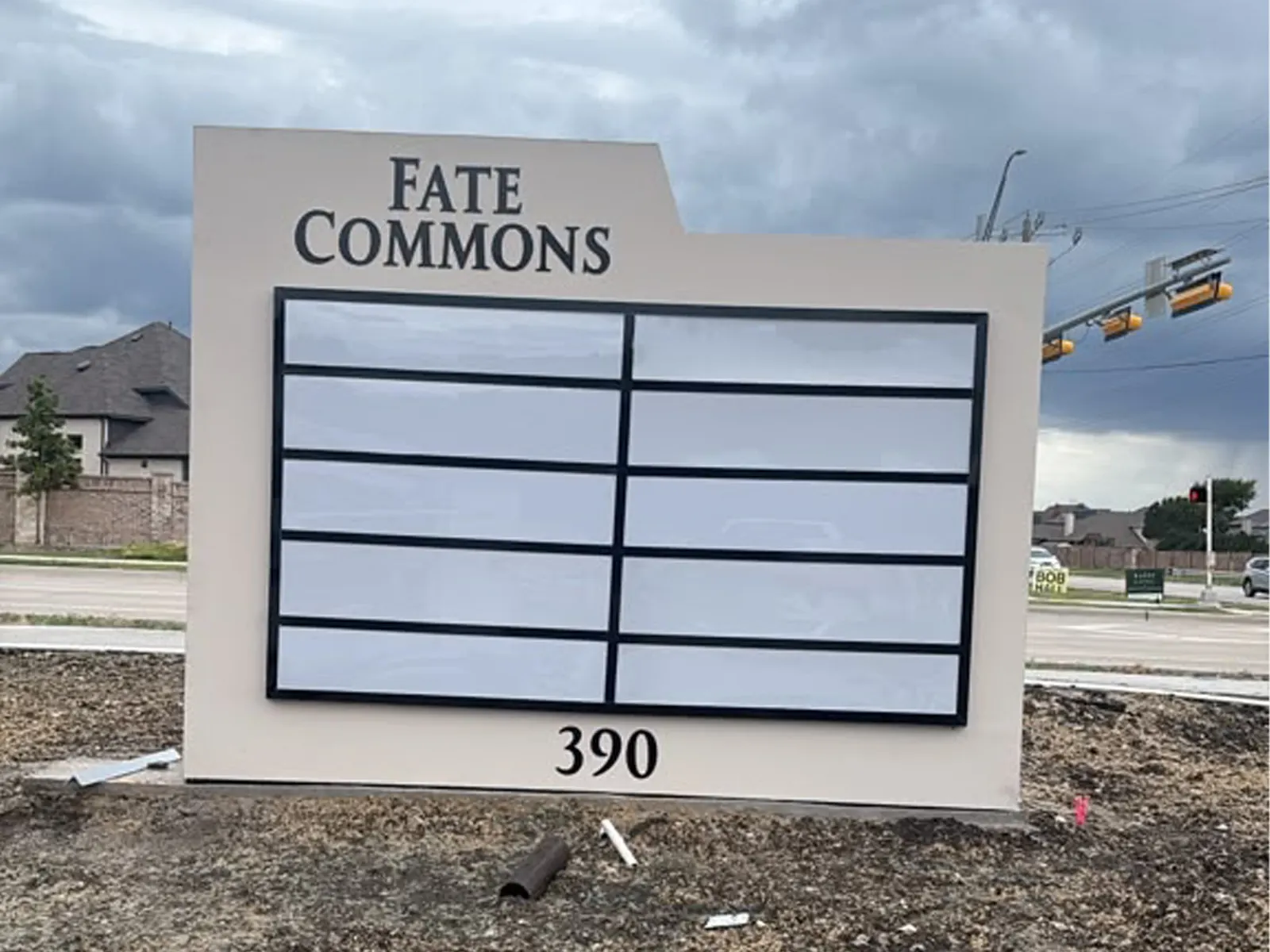
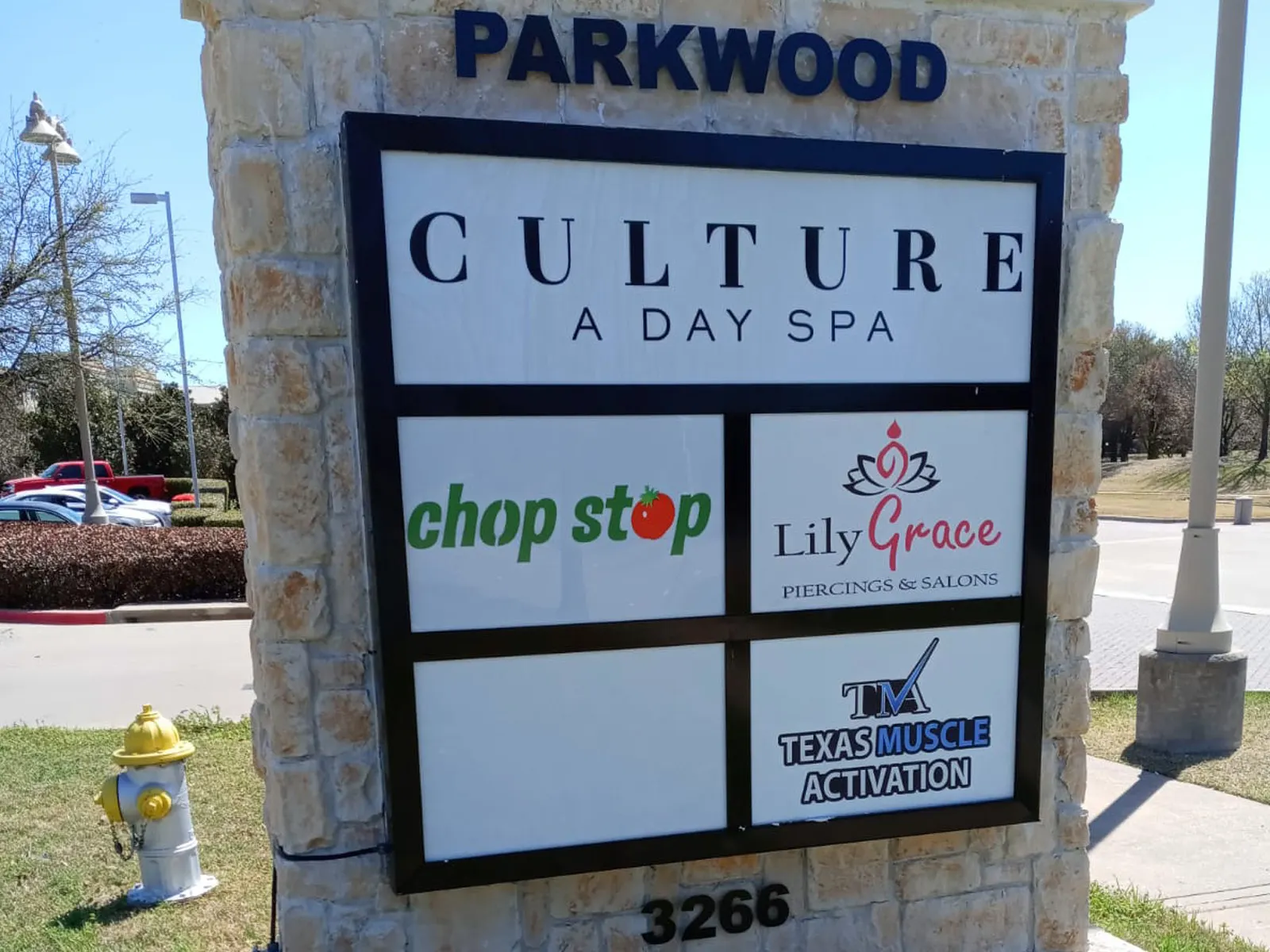
The center's name up top and a grid of tenant panels below put every business at the curb, with panels that change as the leasing does.
Construction
The construction sets the look, the weight, the foundation and how the sign can change later. Neither is better in general. One will suit your property better.
| Compare | Masonry-style | Fabricated aluminum |
|---|---|---|
| What it is | A base and body in brick, natural stone or a stone-look finish, with the sign face or letters set into it | A welded aluminum structure with a painted finish, built as one clean form |
| Look | Solid and traditional, tied to the building's brick or stone | Crisp edges, painted color and a modern profile |
| Graphics | Dimensional letters on the masonry, or a sign cabinet set into it | Lit cabinet faces or dimensional letters mounted to the structure |
| Weight and footing | Heavy, so the footing is sized for weight as well as wind | Lighter, but still anchored to an engineered footing for wind |
| Changing it later | Letters and faces can change while the masonry stays | Faces and panels swap out, and the structure can be repainted |
| Best fit | Churches, apartment communities and entries with stone or brick architecture | Corporate, medical and retail sites with contemporary buildings |
Many monuments combine the two, such as a fabricated aluminum sign cabinet on a masonry base. We recommend the mix that suits your building, your budget and your city's code.
Design
Most monuments are built from three parts. The base grounds the sign and often echoes the building's masonry. The face carries the name, logo and address. The cap finishes the top edge, and its profile, whether flat, stepped or arched, sets the tone before anyone reads a word.
Good design starts from the road, not the drawing board. We size letters for the speed and distance of the approach, keep the face above the landscaping and turn the sign toward traffic, which often means two faces set back to back or angled in a V.
Try the combinations
Switch between a masonry-style base and a fabricated aluminum structure, change the finish, then compare an internally lit cabinet with halo-lit letters. It is a quick way to find the direction that suits your property before a single drawing is made.
Interactive illustration
Stacked stone suits entrances, campuses and churches, and can match the building it belongs to.
Illumination
Lighting decides how the sign reads after dark, and what the city will allow near the road or next to homes.
LED modules inside an aluminum cabinet shine through a translucent face, so the whole panel glows evenly. The most legible option at night and the usual choice for tenant panels.
Solid metal letters stand off the face or the masonry with LEDs aimed backward, so each character sits in a soft ring of light. Quieter and more architectural, suited to corporate campuses and residential communities.
Channel letters with translucent faces mounted to the monument. Bright, colorful and easy to read, built the same way as storefront channel letters.
Dimensional letters in aluminum or acrylic read by daylight and by the site lighting around them. Simple, durable and often the right call where lighting is restricted.
Lit monuments need power at the sign location, usually run underground from the building or a nearby service. We plan the route during design, and Texas requires a licensed electrical sign contractor for the connection.
Where the property meets the street.
Installation brings it together: utility locates, a footing sized for the sign, a level set and, for lit monuments, the final electrical connection.
Tenant panels
On a multi-tenant monument, the center name stays put and the tenant panels do the changing. Each panel sits in its own opening in the cabinet, so a new business can be added, or a departing one removed, without touching the structure.
We lay out the grid around how the center is leased: which tenants get the larger anchor panels, how many smaller spaces are needed and how every name reads from the road. Blank panels hold the spaces that are still to be leased.
Structure, engineering and permits
A monument looks simple from the road. The work underneath it is not.
A monument sits on a concrete footing sized for the sign's weight, the site soils and wind exposure. Masonry adds considerable weight, and the footing design has to account for it.
We detail the internal frame, the anchor connections and the footing, and provide engineering where the city requires it with the permit.
Cities control how close a sign can sit to the street and keep the corners of driveways and intersections clear, so drivers leaving the property can see oncoming traffic. We place the sign to meet the code for your address.
New monuments generally need a city sign permit in DFW. Business parks, planned developments and HOAs may add a review of their own. We prepare drawings for each approval in the right order.
Underground utilities are located and marked before anything is dug. It protects the site and keeps installation day on schedule.
Planting beds and irrigation often surround the base. We plan the sign so sprinklers do not spray the face and shrubs do not grow over the name.
Project gallery
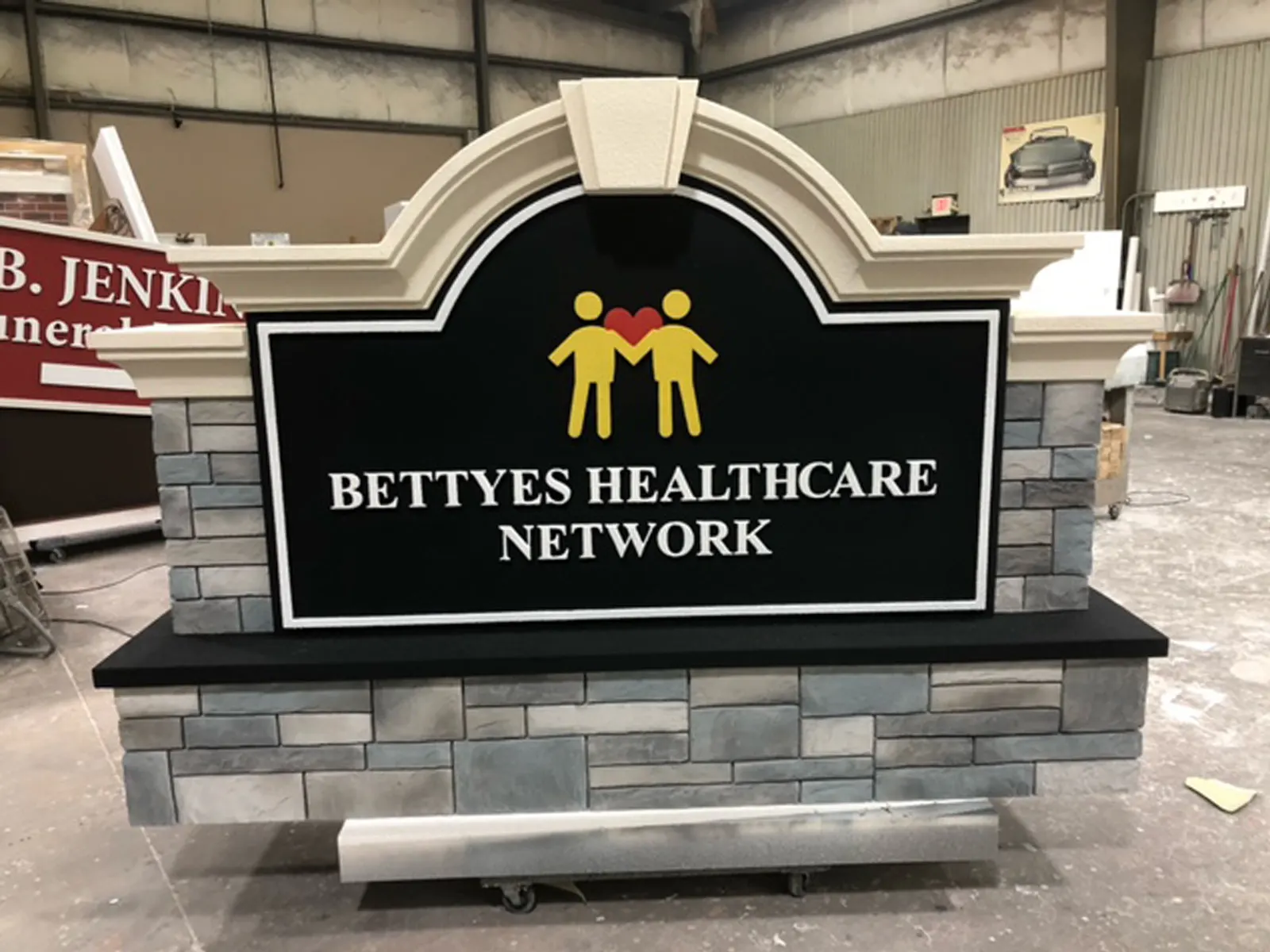
Stone, stone-look and fabricated monuments for businesses, churches, apartment communities and multi-tenant centers, including signs photographed in the shop before delivery.
How we deliver
Every monument signs project follows the same six steps. Here is what each one means for this sign type.
We stake the proposed location, check sight lines from both directions and note utilities, slope and landscaping.
Base, cap and face are drawn to scale with your building materials, tenant layout and address numerals in place.
The footing and internal frame are sized for the sign's weight, the site soils and wind exposure.
We confirm setback and sight-line rules, get owner, HOA or development sign-off where needed, then file the city permit.
Cabinets, faces and letters are built and finished at our Carrollton facility, with lit components wired before delivery.
The footing is poured, the structure set level, cladding and faces completed, then lit signs are connected and powered.
Related projects
Dallas Fort Worth
Much of the newer development in North Texas suburbs favors low monument signs that share the materials of the buildings behind them, and some cities and planned developments write that preference into their standards. Older corridors in Dallas and Fort Worth mix monuments with legacy pole signs. Business parks and HOAs can add rules of their own. We build monuments at our Carrollton facility and take each one through the approvals its address requires, whether the site is in McKinney, Allen, Richardson or Arlington.
Free project review
Send the property address, a photo of where the sign will stand and your logo. We will suggest a construction style and a lighting approach, and outline the approvals your site will need.
Straight answers
Something else on your mind? Call (469) 901-3108 or send the details through the quote form.
Most are masonry-style, fabricated aluminum or a combination. Masonry-style monuments use brick, natural stone or a stone-look finish on the base and body. Fabricated monuments are built from aluminum with a painted finish. Faces and letters can be aluminum, acrylic or both, and many signs pair an aluminum cabinet with a masonry base.
Yes. The two most common approaches are an internally lit cabinet, where LEDs shine through a translucent face, and halo-lit letters, where LEDs wash light onto the surface behind solid letters. Lit signs need power at the sign location and electrical work by a licensed electrical sign contractor. Some cities limit sign lighting near homes.
Yes. Multi-tenant monuments pair the center name with a grid of individual tenant panels. When a tenant moves in or out, only that panel changes, so the sign keeps up with the leasing without new construction.
Yes. We design masonry-style monuments with brick, natural stone or stone-look bases and can match the masonry on your building. The faces, letters and cabinets come out of our Carrollton facility, and we coordinate the full build through installation.
In most DFW cities, yes. Plan on a sign permit, and in some cities a review of engineering, placement and lighting as well. Business parks, planned developments and HOAs may add their own approval. Each city and zoning district has its own rules, so we look up the requirements for your property and handle the applications.
If traffic approaches from both directions, a double-sided sign set perpendicular to the road, or a V-shaped sign angled toward each approach, is usually the better choice. A single-sided sign works when it faces one main approach or sits against a wall or landscaped backdrop.
Yes, throughout Dallas Fort Worth. Monuments are built at our Carrollton facility, then delivered and installed by our team, whether the property is in Dallas, Plano, Frisco, McKinney, Allen, Arlington or Fort Worth.
The property address, a photo of the proposed location, your logo and a sense of the style you like: masonry, aluminum or a mix, lit or non-lit. If the site has landlord, HOA or development sign standards, send those too.
Keep exploring
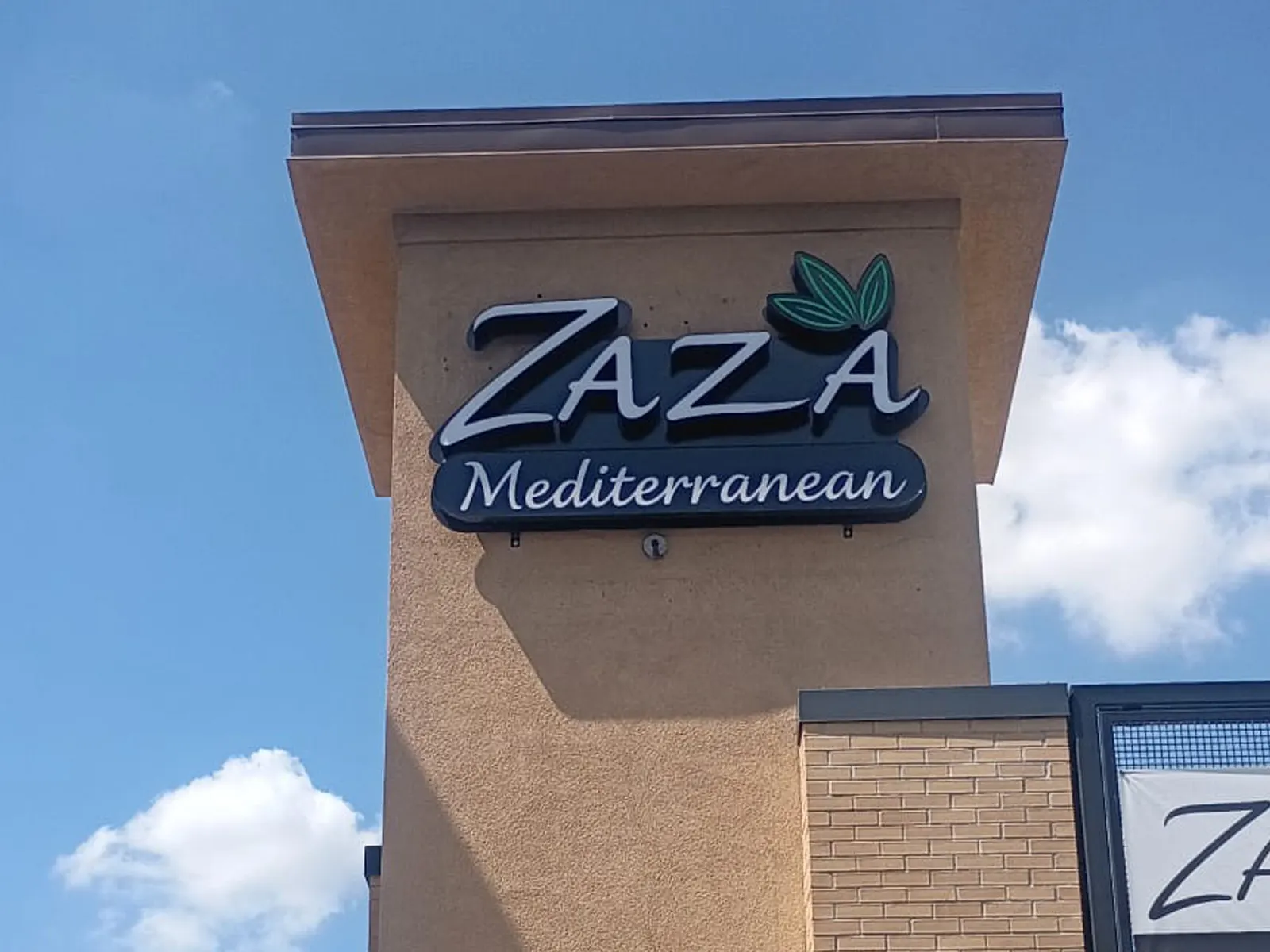
Freestanding signs raised on poles or pylons, so drivers see your name in time to turn.
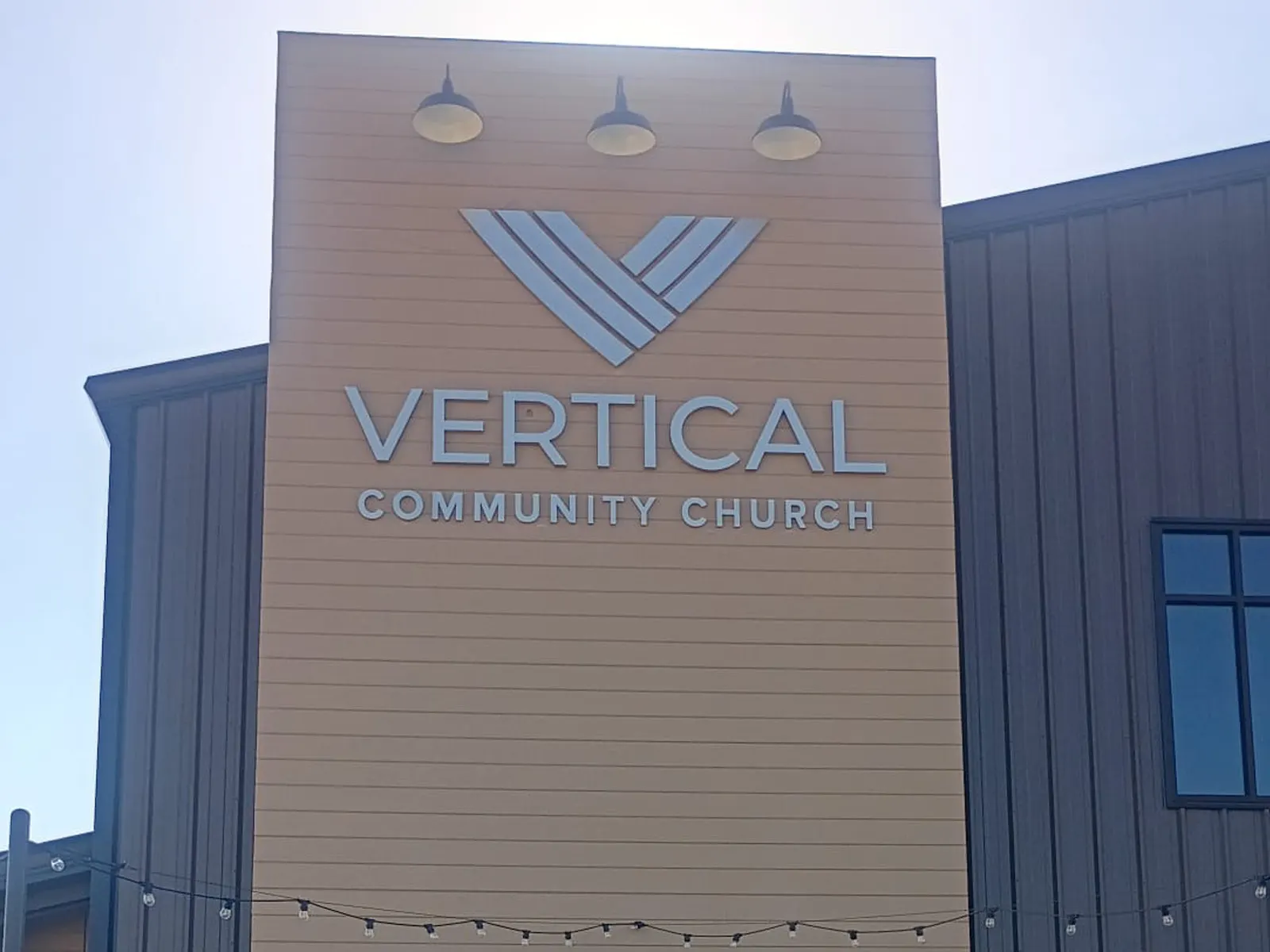
Monument, building and campus signs that help first-time guests find the church, the parking and the front door.
Complete sign programs for retail centers, office and industrial properties, managed from survey to maintenance.
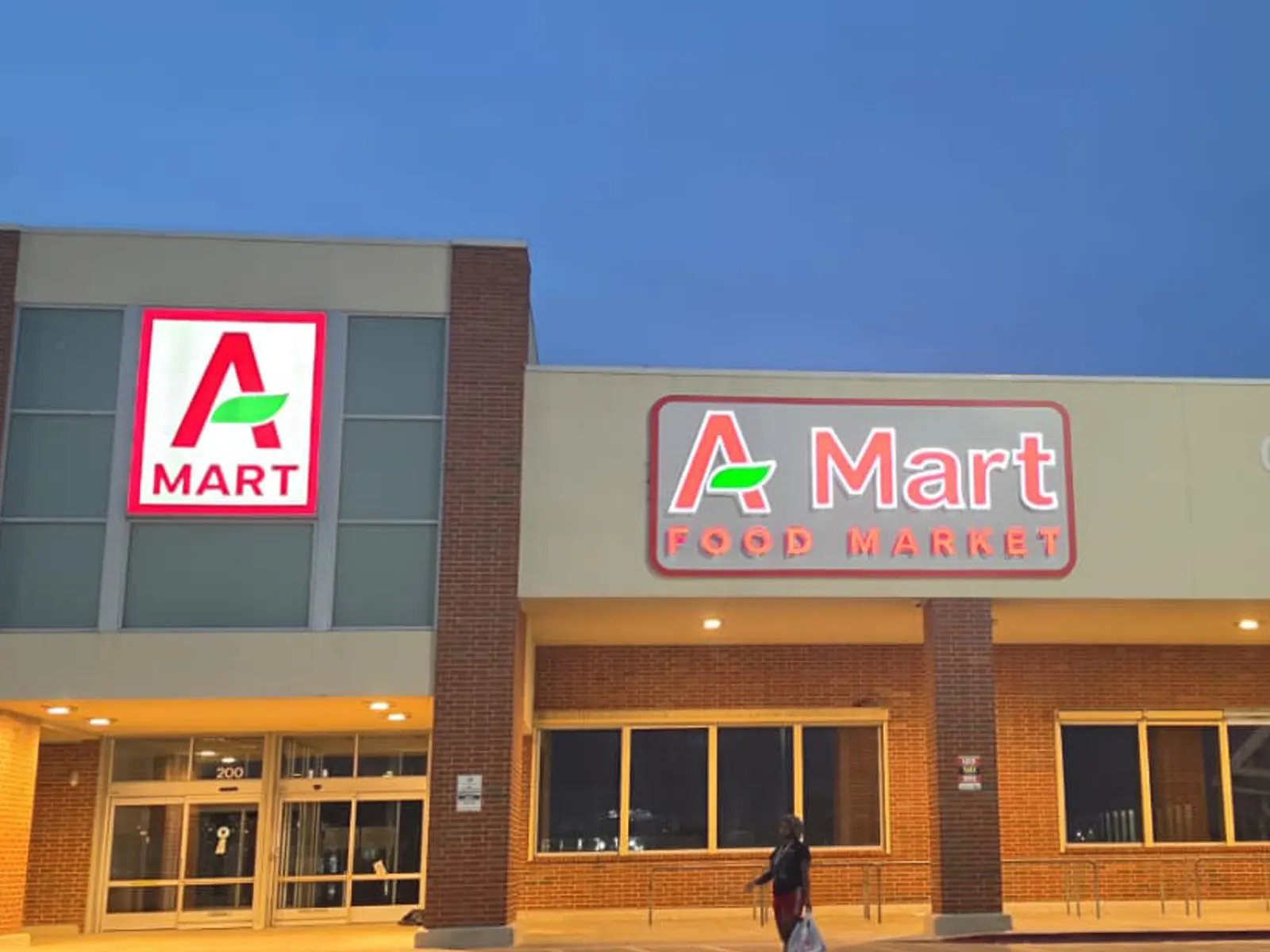
LED-lit letters, cabinets, monuments and pole signs that keep your name readable after sunset.
Start with the space. End with a landmark.
Tell us what you are building and where. We will help you choose the right sign system and handle the approvals, fabrication and installation.