Channel letters
Individual aluminum letters lit from inside by LEDs, front-lit, halo-lit or both. The standard for buildings that need to be found at night.
Explore channel letters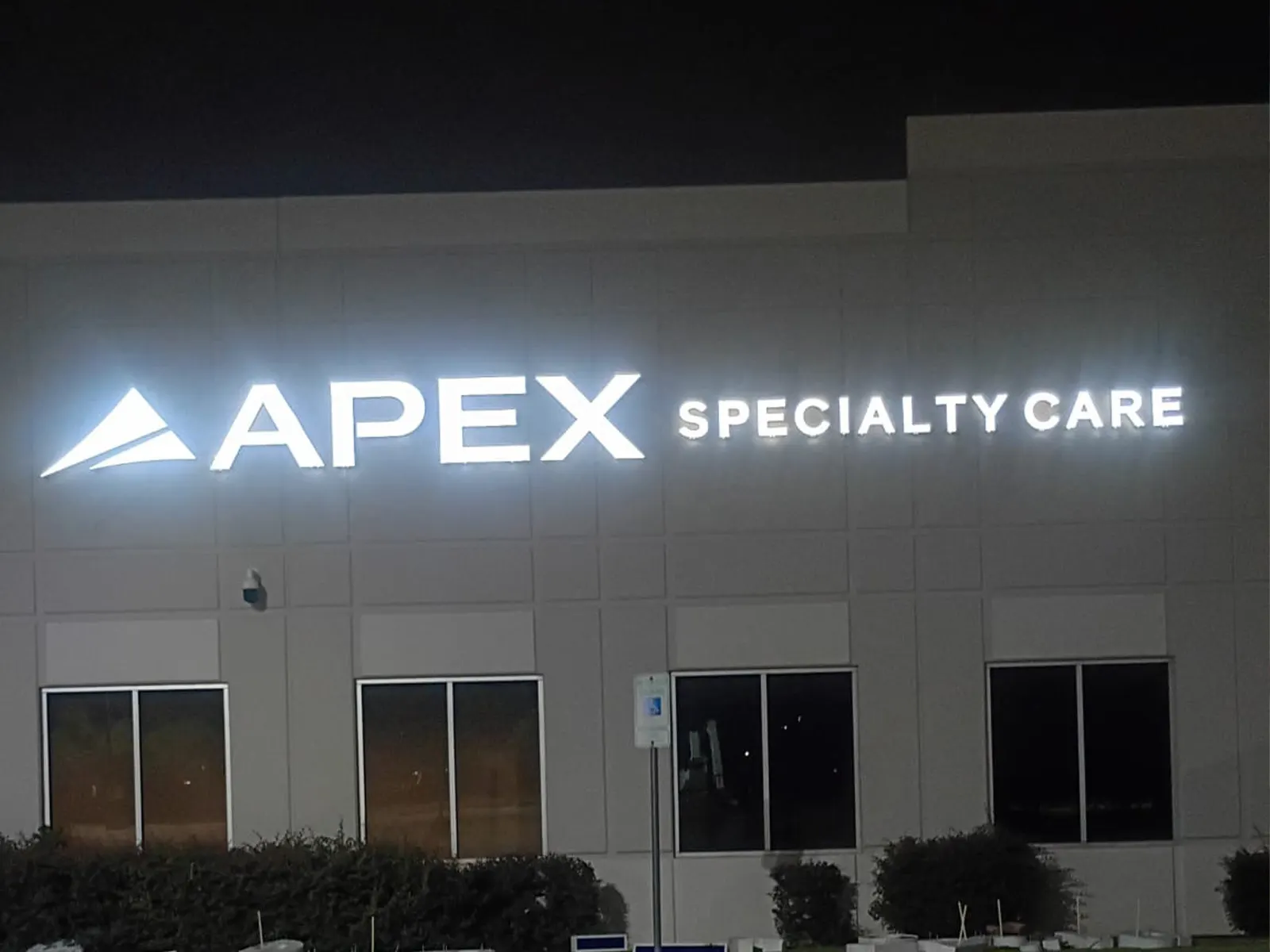
Building signs · Dallas Fort Worth
A building can carry your name further than any other sign you own. We design, engineer, permit, fabricate and install wall-mounted signs for offices, clinics, warehouses and retail buildings across Dallas Fort Worth, sized for the distance people actually see them from.

A building sign is any sign mounted directly to the exterior of a building, usually on the fascia, parapet or upper wall. Common types include channel letters, cabinet (box) signs, dimensional letters and logo marks. Because the wall is the structure, a good building sign starts with the wall itself: what it is made of, how the sign attaches and where power reaches it.
Wall-mounted signs
A monument or pole sign brings its own structure. A building sign borrows yours. That saves a foundation, but it moves all the attention onto the wall: what it is built from, what sits behind it, how much weight it can carry and how power gets to the sign.
Get those answers right and a building sign is the most permanent-looking identification a business can have. Letters sit where the architect intended, fasteners disappear, and the name reads as part of the facade instead of something added later.

Sign types
The right type depends on viewing distance, lighting needs, the wall surface and, on leased buildings, the owner's sign criteria.
Individual aluminum letters lit from inside by LEDs, front-lit, halo-lit or both. The standard for buildings that need to be found at night.
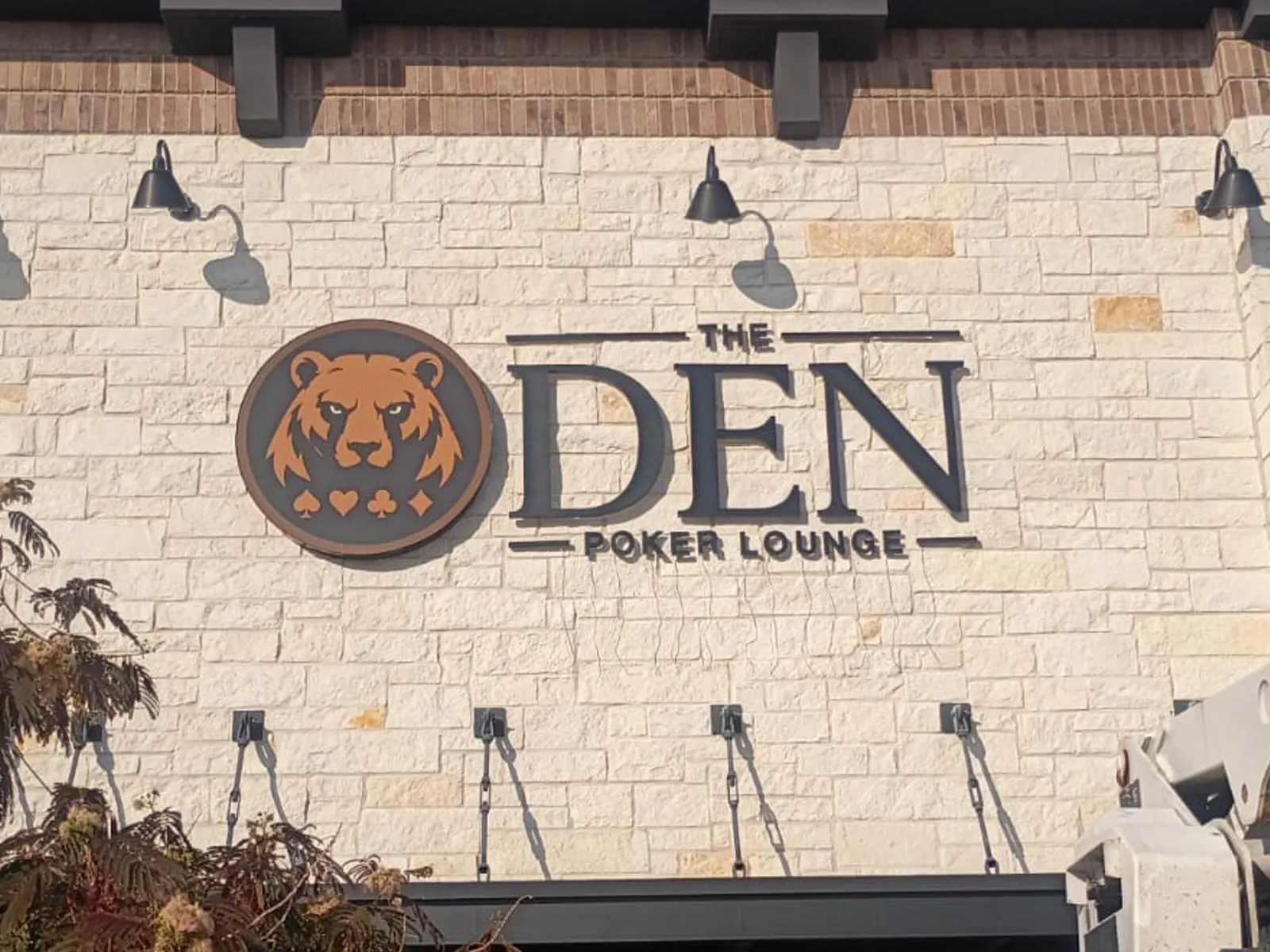
Explore channel lettersSolid letters in aluminum, acrylic or PVC, pinned to the wall or held off it on stand-offs. Sunlight does the work, casting a shadow line that gives a quiet facade real depth.
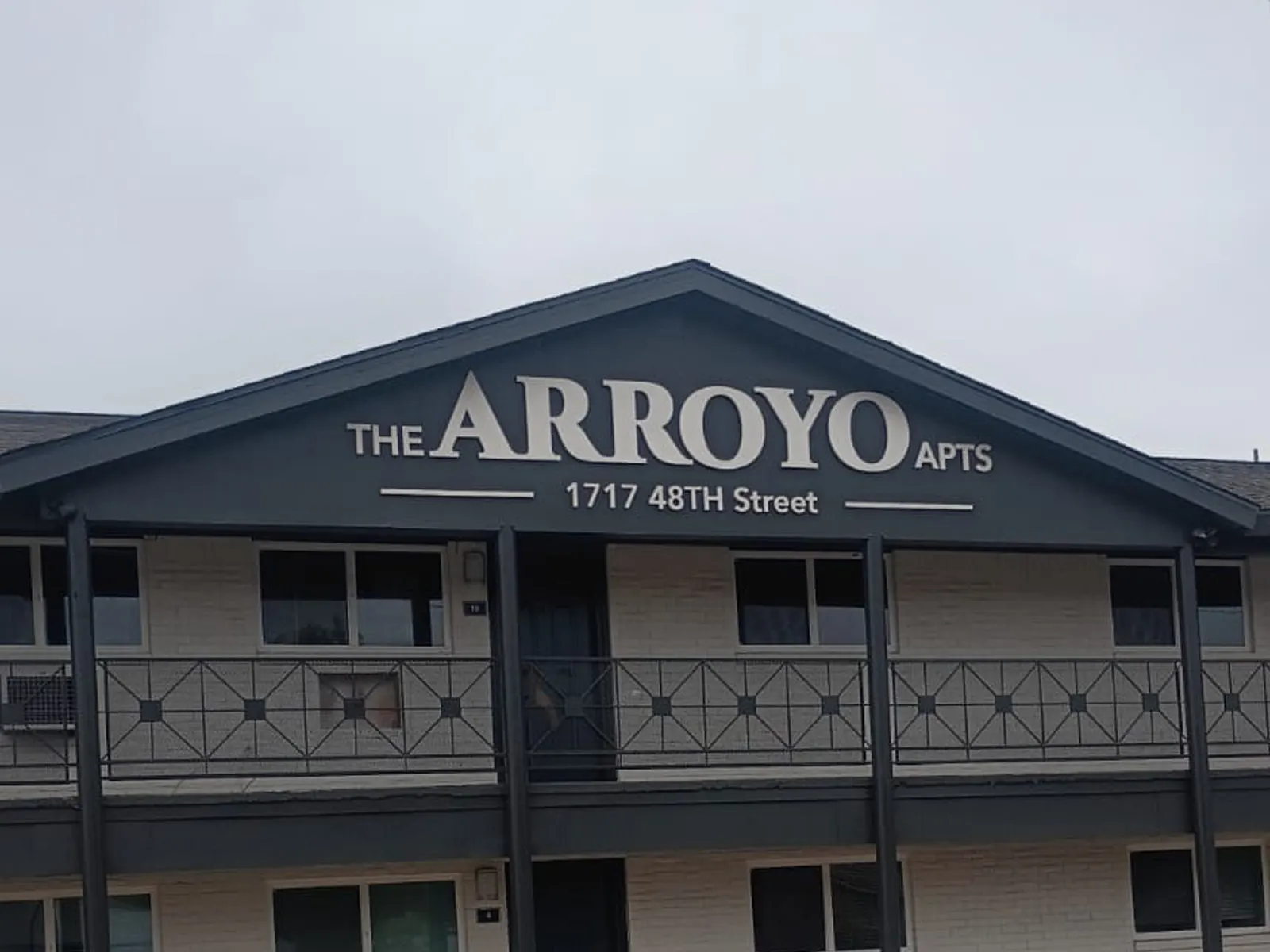
A fabricated box with a lit face, mounted flush to the wall or on a frame. Cabinets suit detailed logos and solid backgrounds, and they can be cut to a shape, like an oval logo above a set of letters.
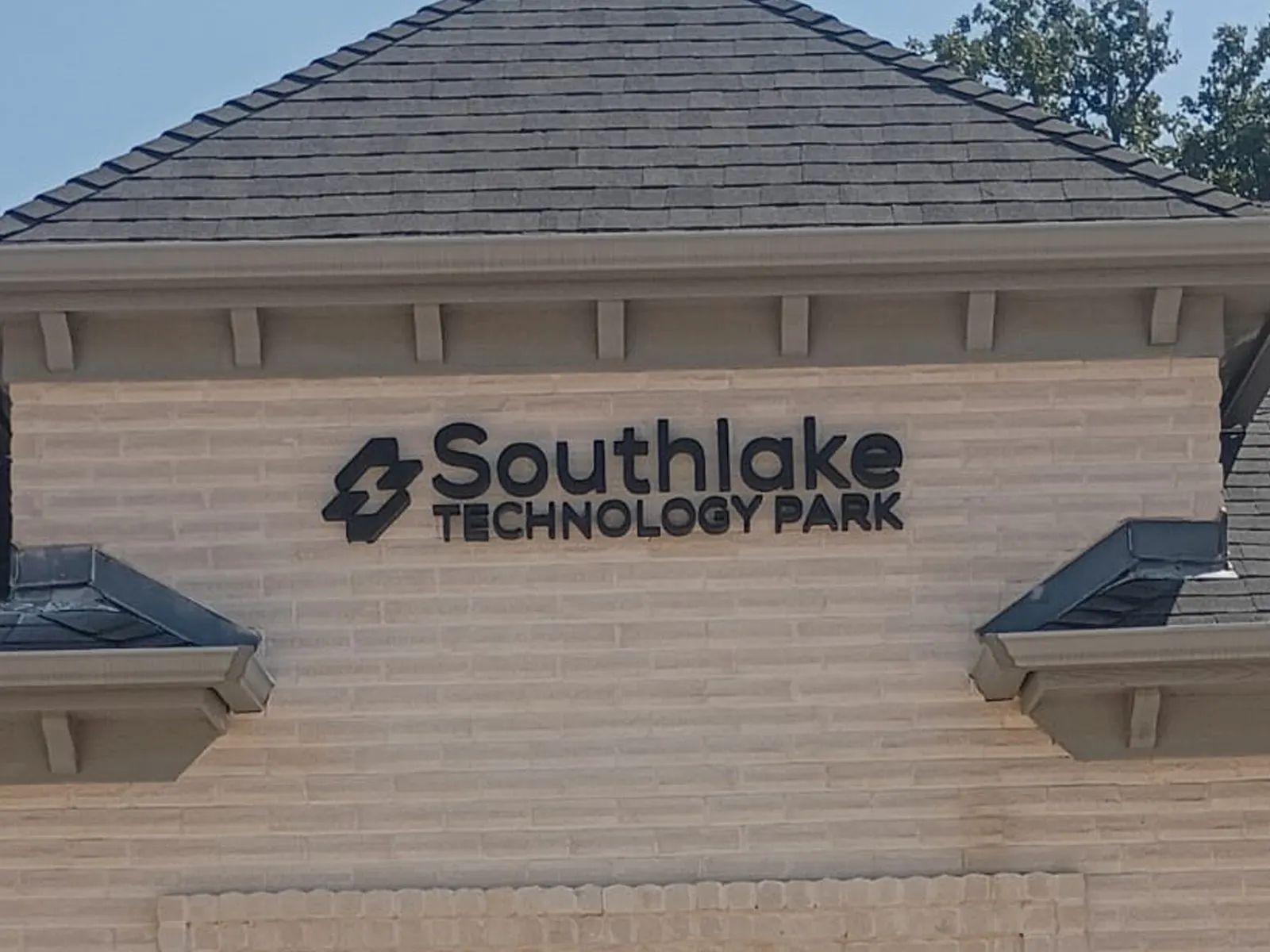
A logo built as its own object, often larger than the lettering around it, so a building can be recognized before its name is readable.
Explore the elevation
Move across a sample building elevation, from the entrance canopy to the top of the parapet. Each zone shows which sign types fit there, who reads them and what it takes to mount them.
Illustration
Letters near the roofline identify the building from the road and across the parking field. Size and mounting are engineered for the wall and the view distance.
Explore high-mount channel lettersAn internally lit cabinet carries a round or square logo mark that would be complex as individual letters. It pairs well with a channel letter name.
Explore logo cabinetNon-lit dimensional letters beside the door confirm the entrance at walking distance, often cut from aluminum or acrylic and set on stand-offs.
Explore entry dimensional lettersPrinted or cut vinyl adds hours, services and privacy to storefront glass without touching the facade.
Explore window graphicsA ground sign at the entrance tells drivers where to turn before they can read the building.
Explore monument at the driveHigh-mount channel letters
High-placement identification
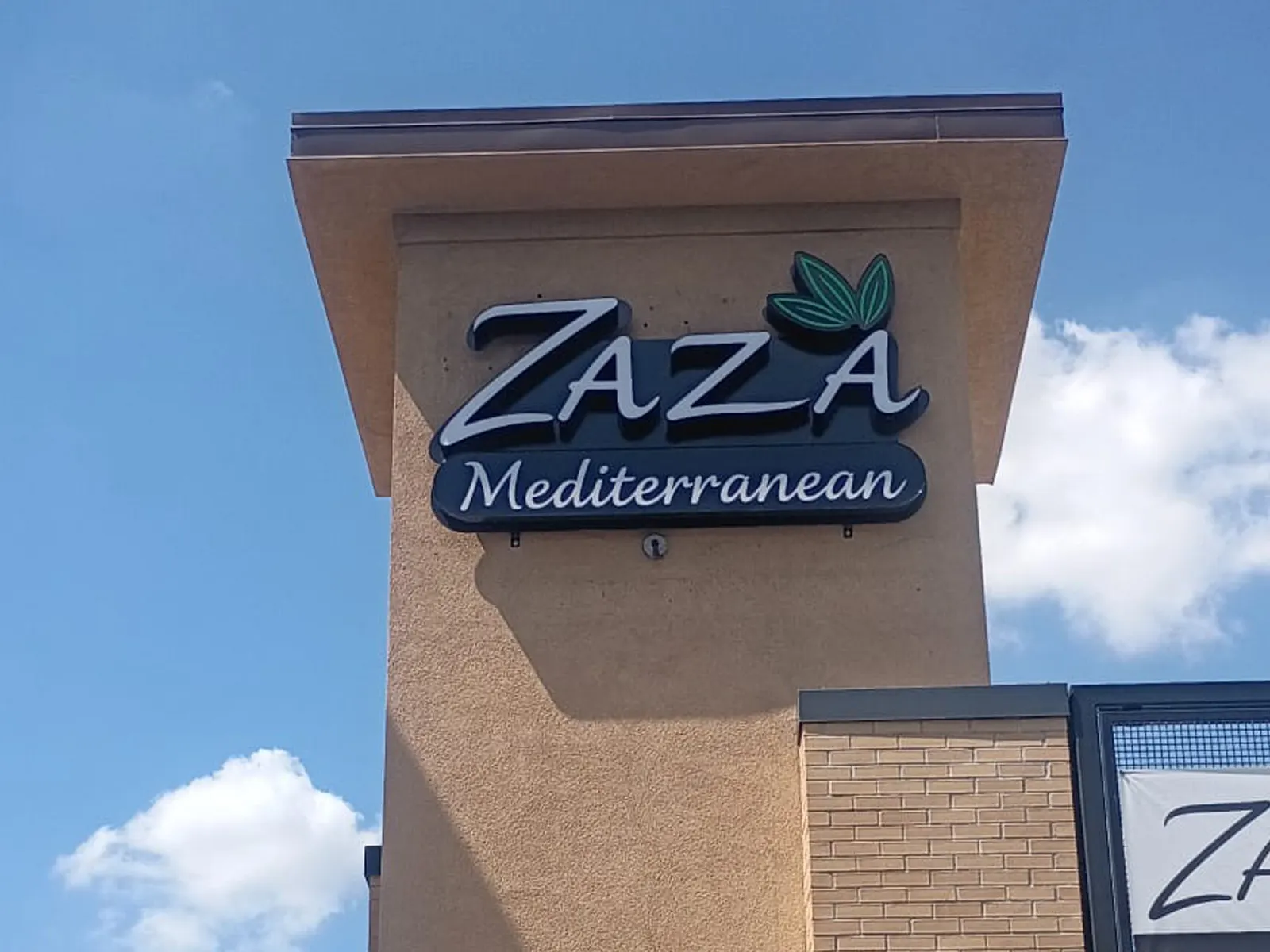
Signs near the top of a building are for people who are not there yet: drivers on the highway, visitors hunting for the right office park, trucks looking for the right entrance. At that distance fine detail disappears. Bold letterforms, strong contrast and simple logo shapes survive.
High placement also changes the work. Installation needs lifts or larger equipment, fastening often goes into tilt-wall concrete or parapet framing, and power has to travel up the building. We plan each of those details at the survey, not on installation day.
Visibility and scale
There is no single answer. Three things set it: how far away people read the sign, how fast they are moving and how much wall the city code and the architecture allow.
| Compare | Entrance level | Fascia or parapet | Upper wall |
|---|---|---|---|
| Read from | The sidewalk, the lot and the door | The parking field and the street | Highways, arterials and neighboring properties |
| Letter approach | Modest height, finer detail works | Larger letters, logo and name together | The largest, simplest letterforms on the building |
| Common sign types | Dimensional letters and address or suite signs | Channel letters, cabinets and dimensional letters | Channel letters or large dimensional letters |
| Install access | Ladder or small lift | Lift from the parking lot | Larger lift, planned well in advance |
| Main limit | Canopy and storefront layout | Landlord criteria and allowable sign area | City sign code and structural attachment |
Cities often tie allowable sign area to zoning and the length of the building frontage. We confirm what your address allows before we size the sign.
Structure, engineering, electrical and permits
The sign is the part you see. These details decide whether it stays level, sealed and lit.
Brick, stone veneer, stucco, EIFS, metal panel and tilt-wall concrete each take different anchors. We identify the wall and what is behind it before we specify a single fastener.
Letters mount directly, on a raceway or on stand-offs. Cabinets bolt to the wall or hang from a support frame. The choice balances appearance, the wall and future service access.
Large or heavy signs, and signs on parapets and upper walls, may need engineered attachment details that account for weight and wind. Some cities ask for them with the permit.
An illuminated sign needs a power source at its location and a safe way to shut it off for service. In Texas that work must be done by a licensed electrical sign contractor. We hold that license and plan the power route during the survey.
Most DFW cities require a sign permit for new exterior signs, with drawings showing size, placement and attachment. Electrical permits may also apply. We prepare and submit the package.
Every wall penetration is sealed to keep water out of the building, and exterior materials are chosen to hold their color and shape in Texas sun and storms.
Installed from the lift. Checked from the road.
We level and align each building sign on the wall, then review it from the street where your customers will actually see it.
Project gallery
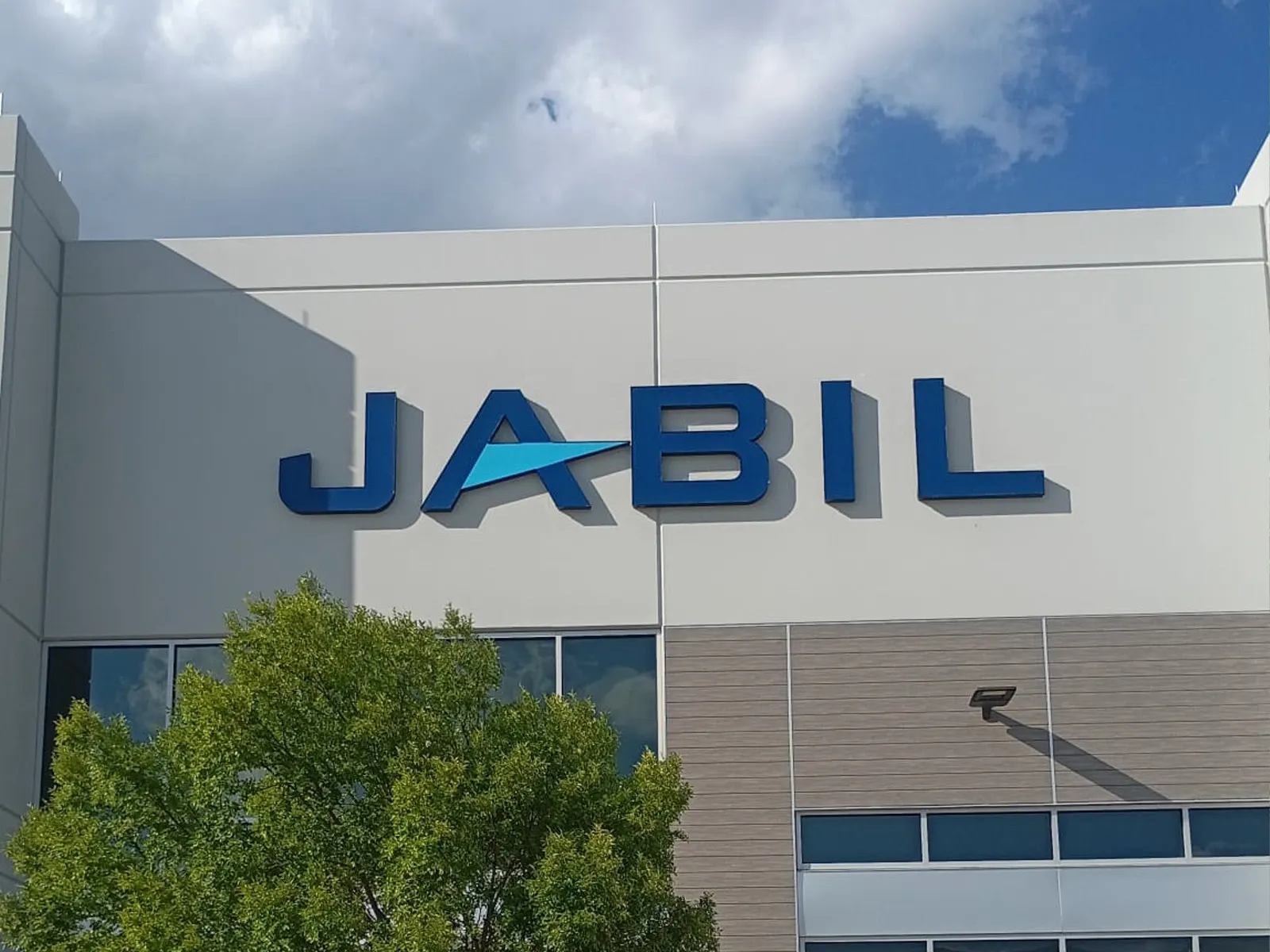
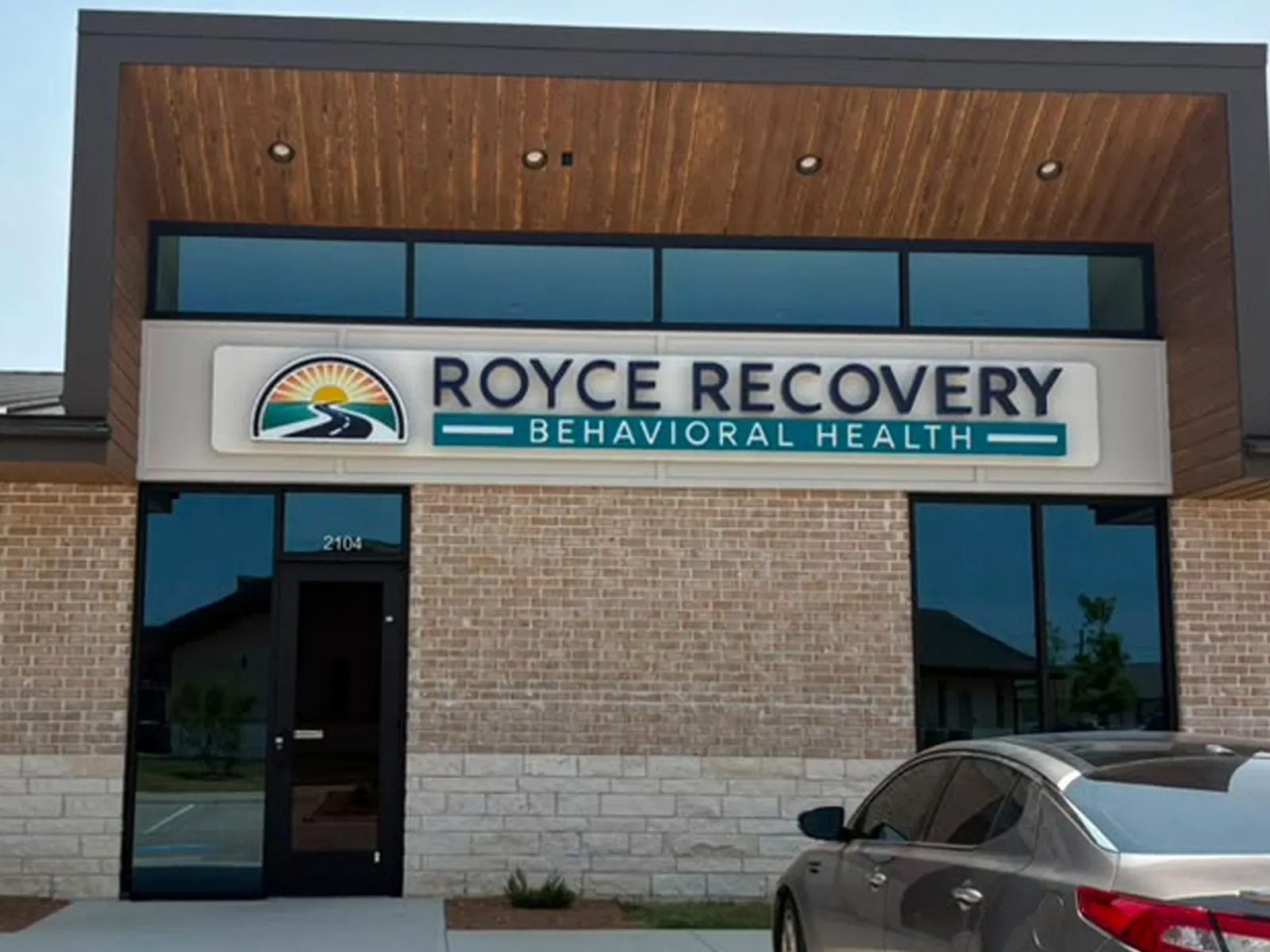
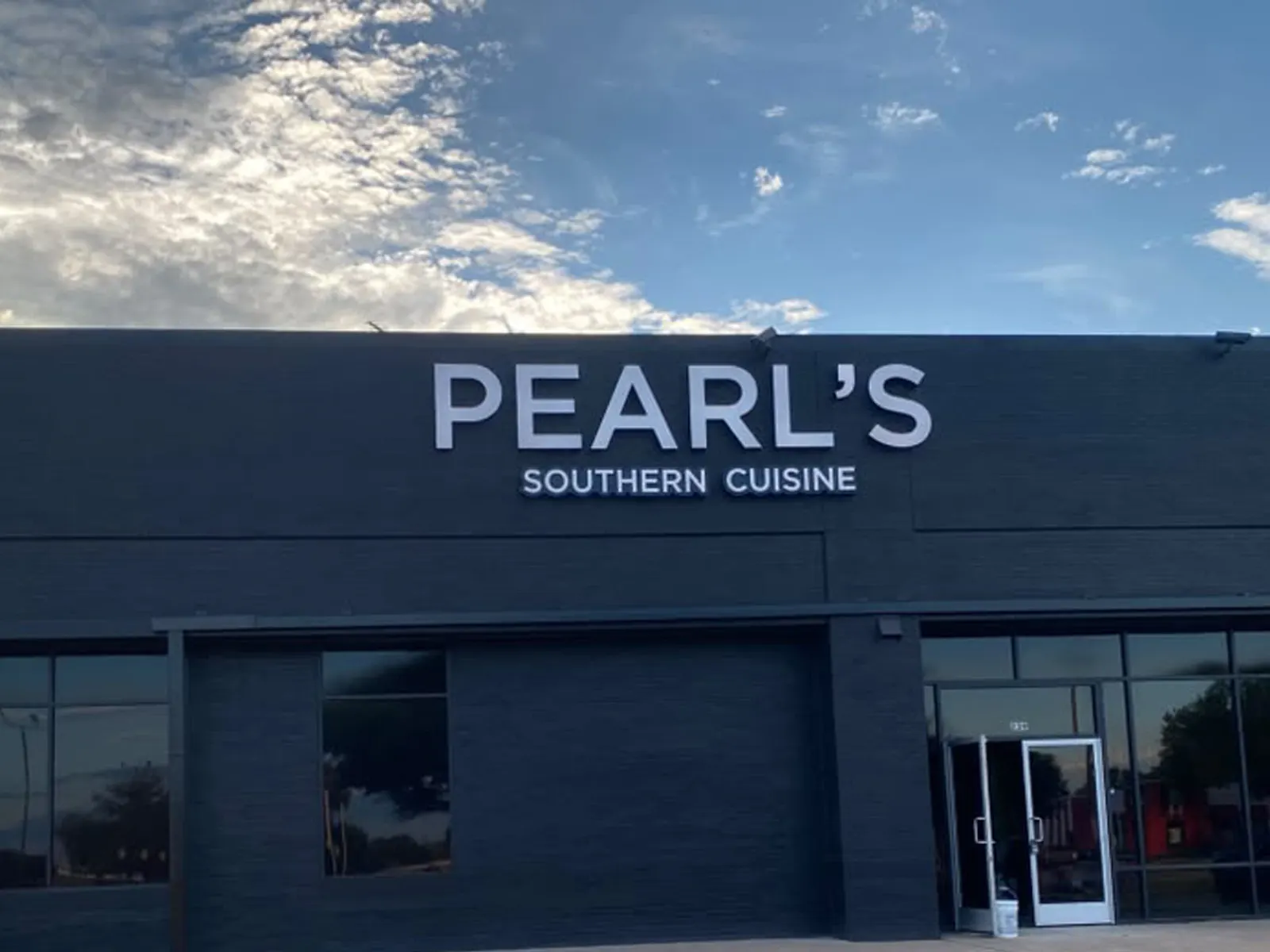
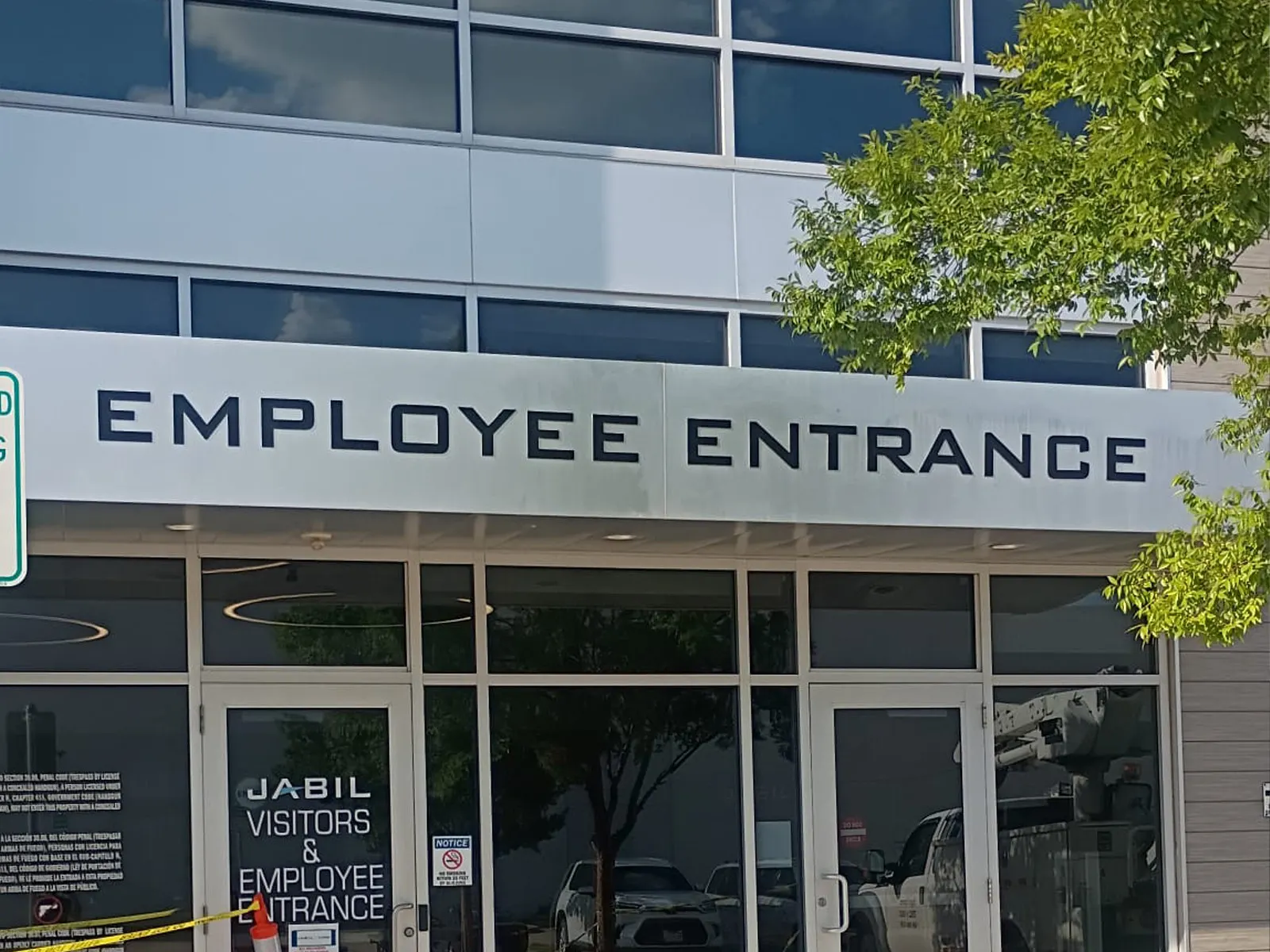
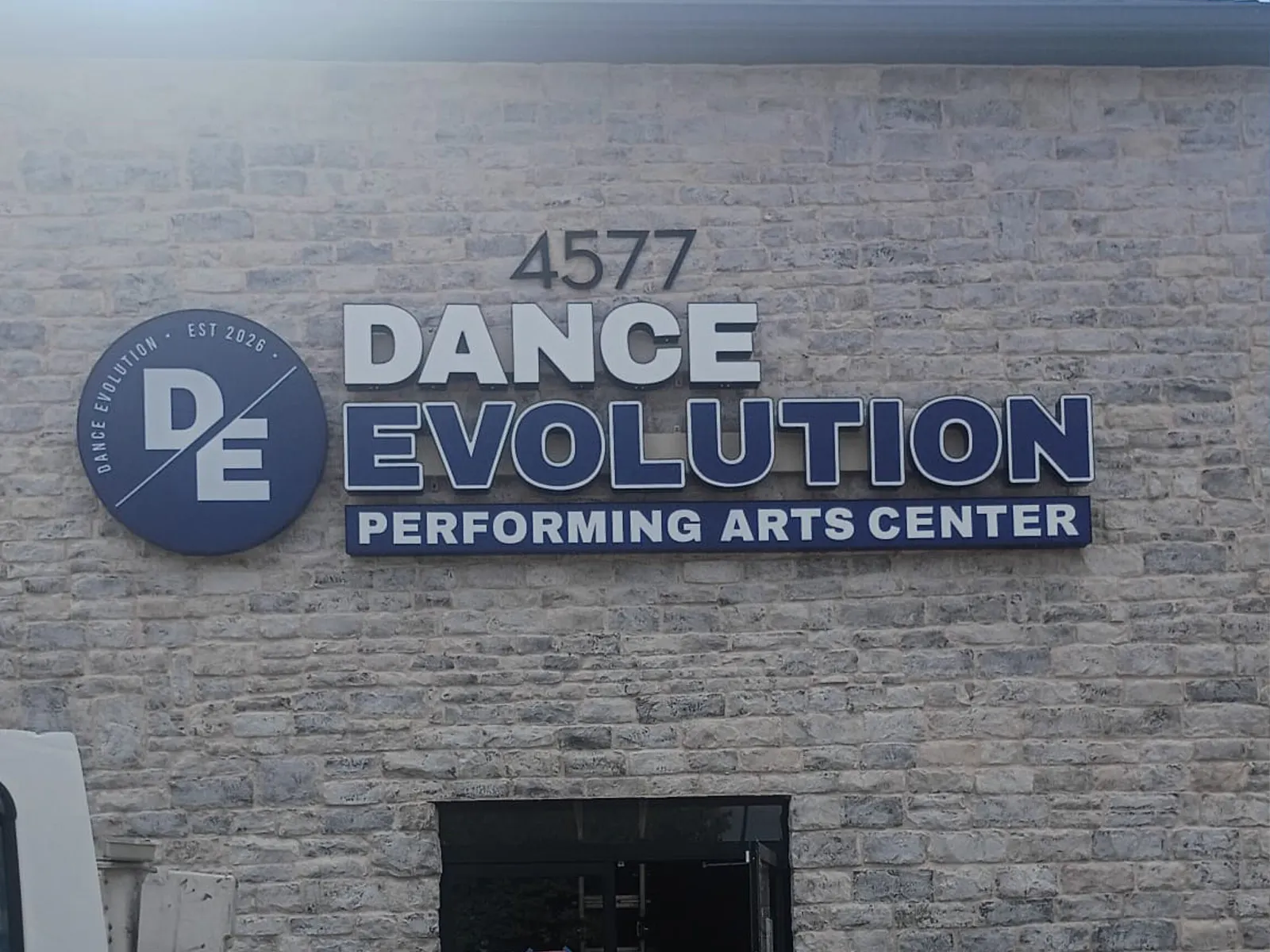
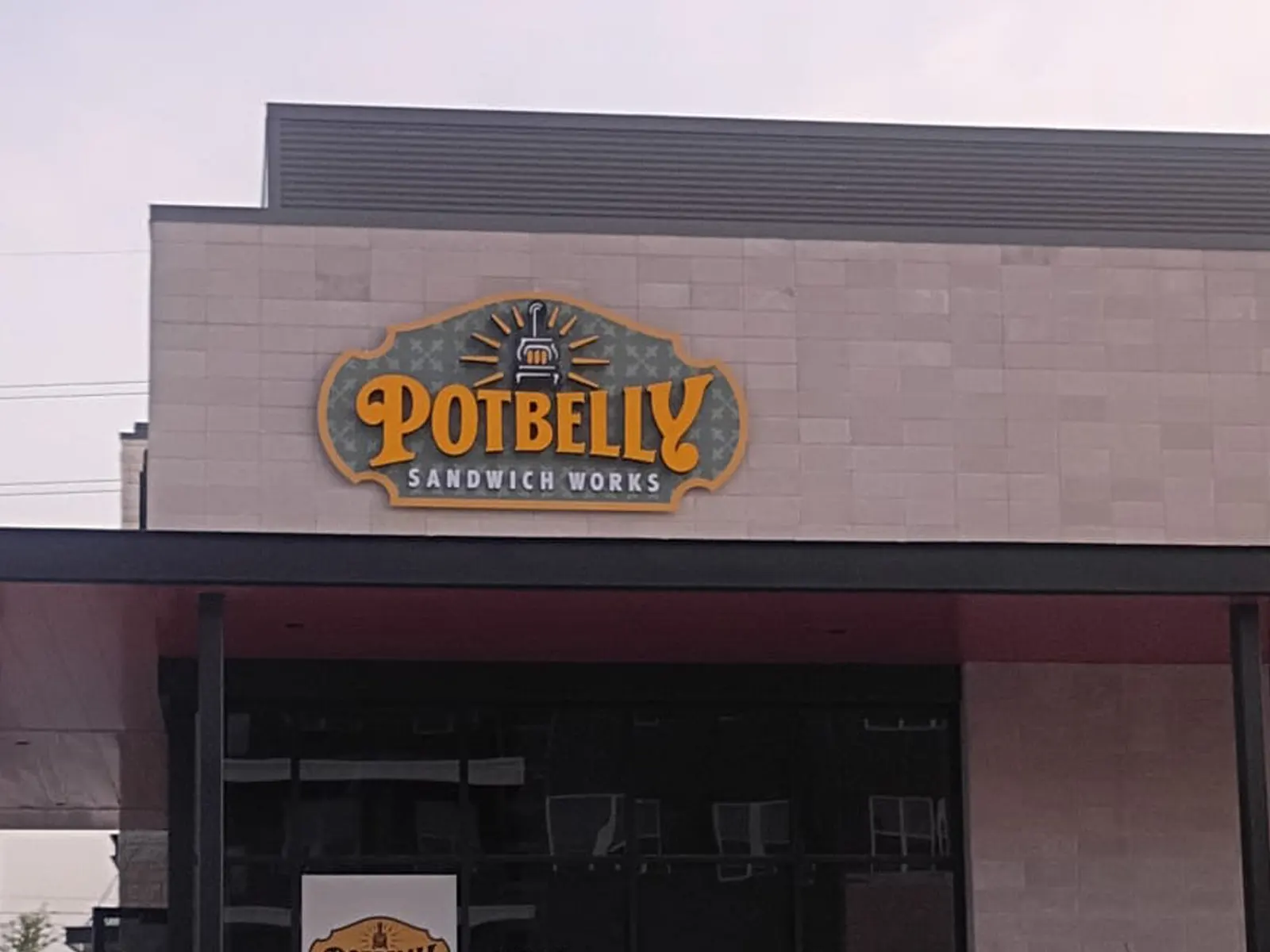
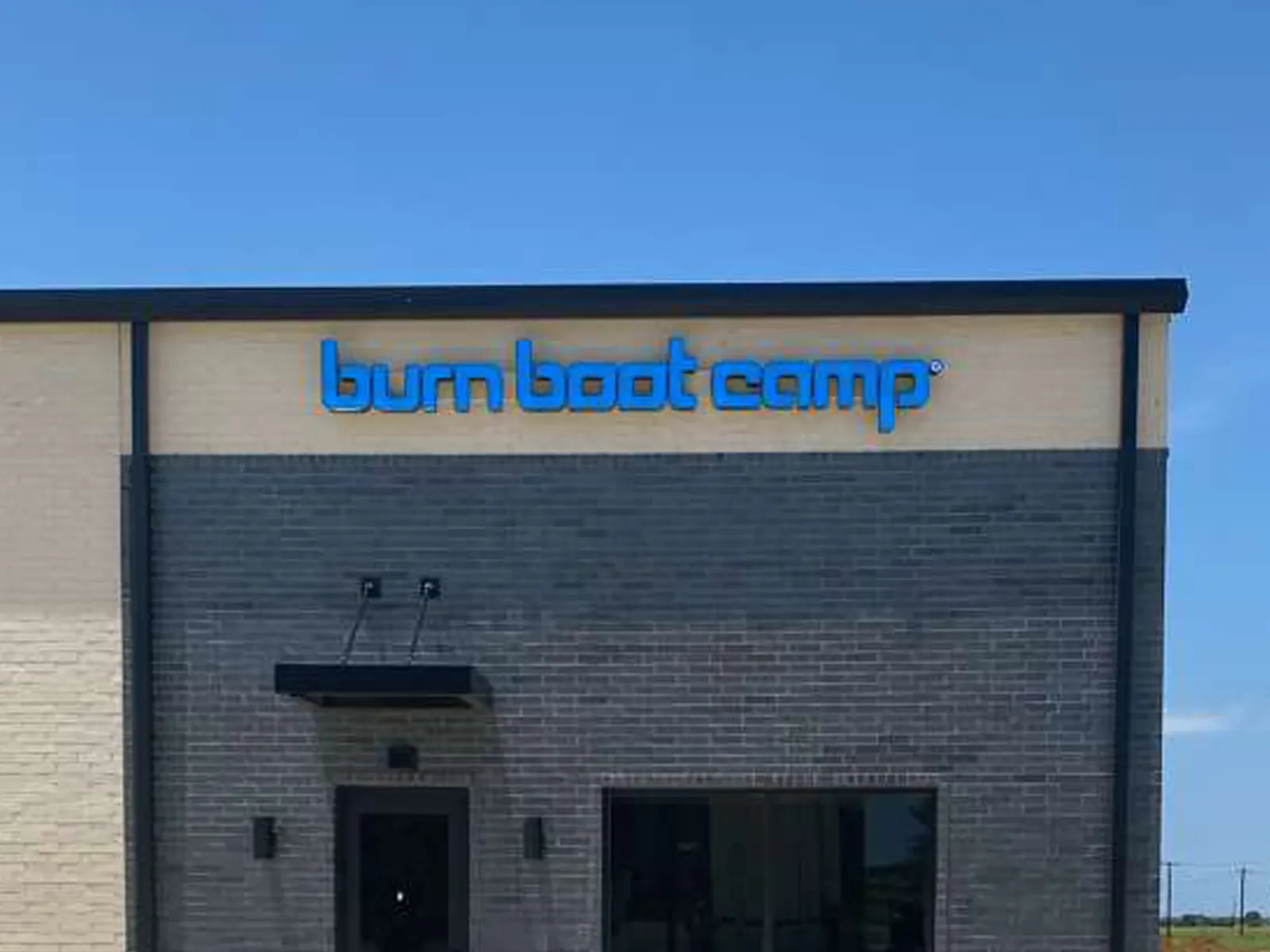
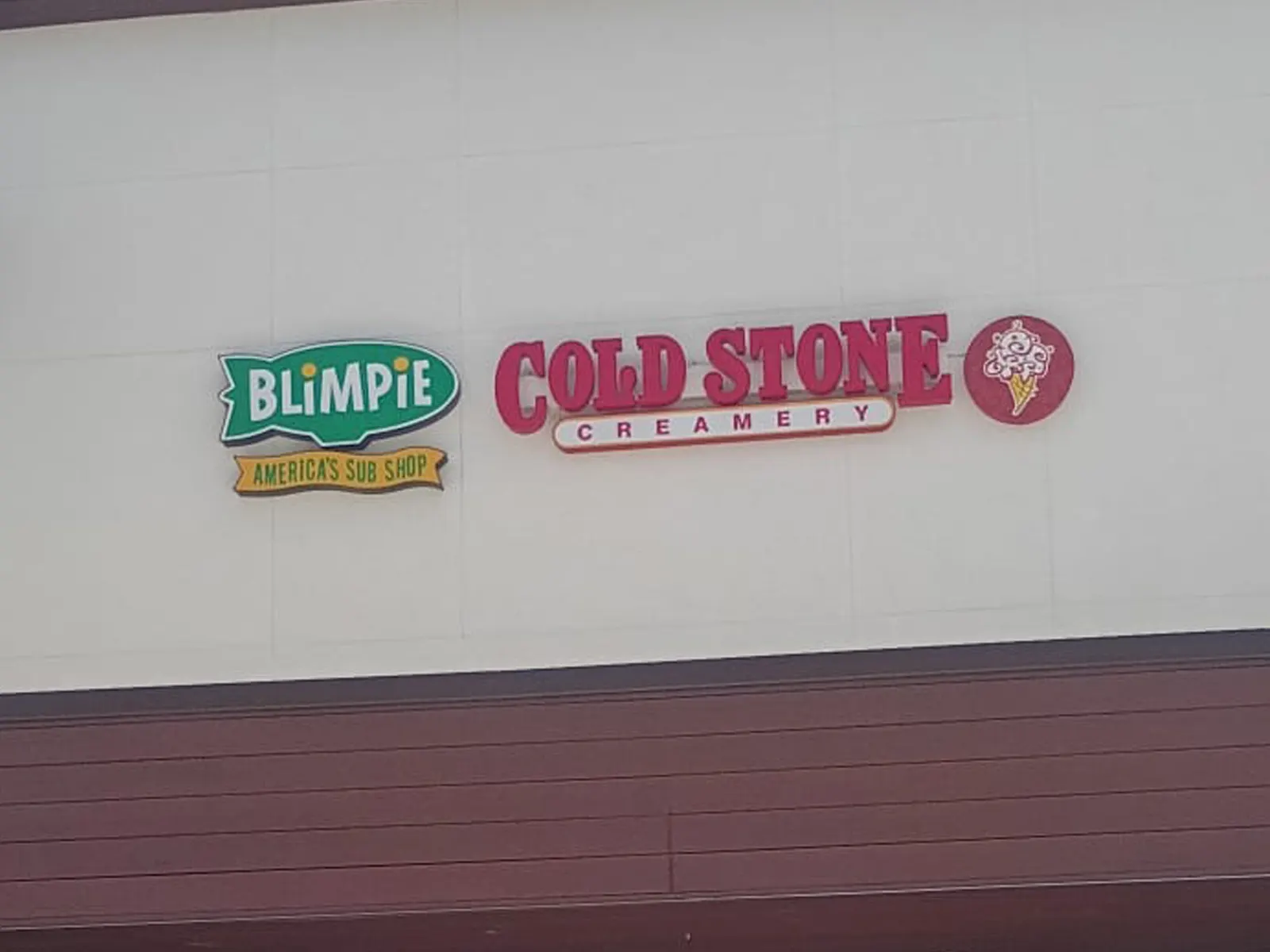
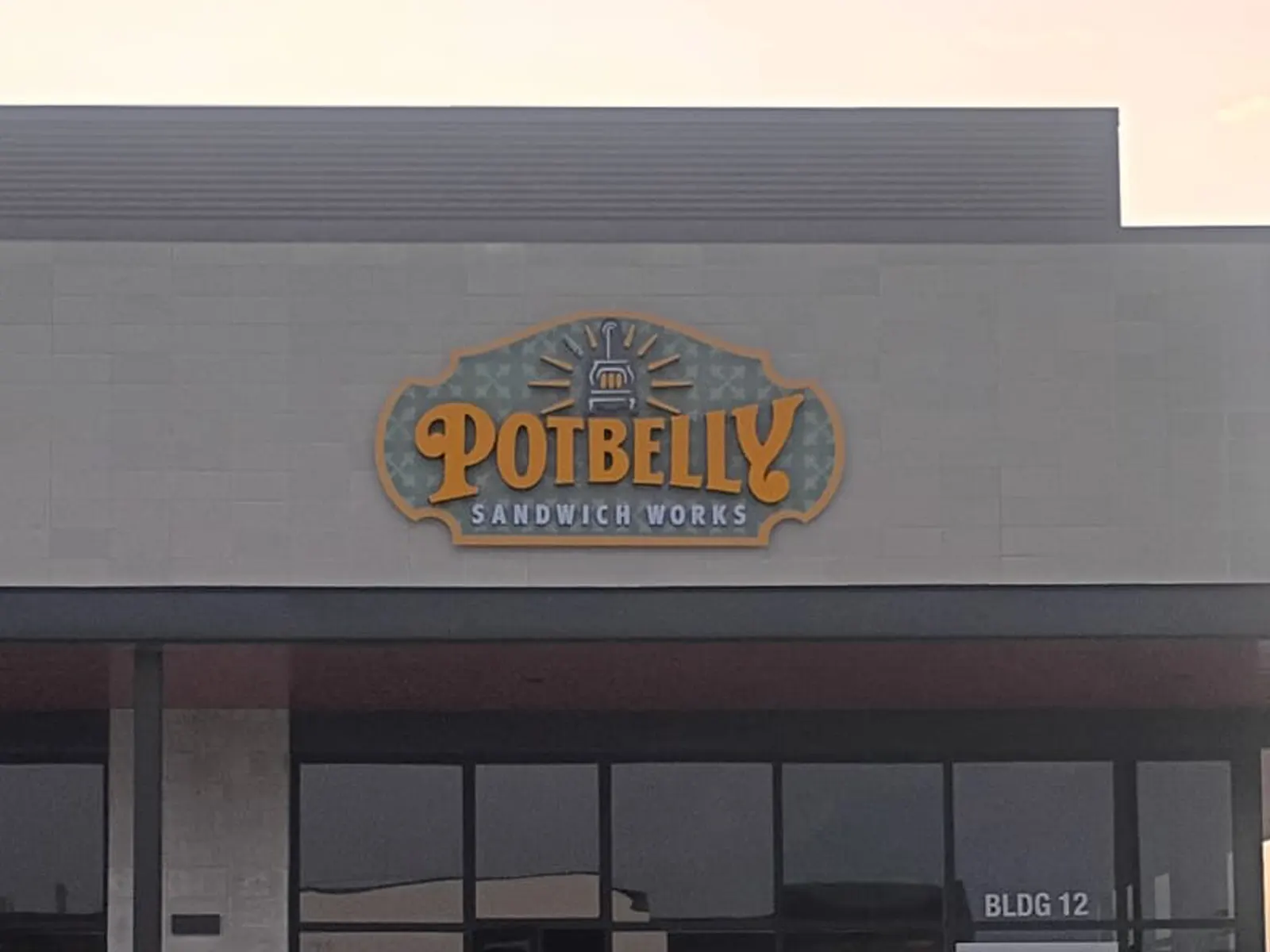
Stone, brick, stucco, metal and tilt-wall: building signs from the Signs Express portfolio, each sized and fastened for a different facade.

How we deliver
Every building signs project follows the same six steps. Here is what each one means for this sign type.
We survey the elevation, identify the wall material and note every point where people first see the building.
Letter height, logo scale and contrast are set for viewing distance, then shown on a photo of your building.
We detail anchors, stand-offs or raceways for your wall type, with engineering where size or height calls for it.
Drawings go to the property owner for approval, then to the city with the sign and electrical permit applications.
Letters, cabinets and logo marks are built at our Carrollton facility and finished in your colors.
We mount from lifts, seal every penetration, make the electrical connections and check the sign from the road.
Related projects
Dallas Fort Worth
Dallas Fort Worth has every kind of wall: tilt-wall warehouses along the interstates, stone and stucco medical buildings in the suburbs and brick commercial blocks around older town squares. Each takes different anchors, and each city reviews building signs under its own code. Our head office and manufacturing facility sits on I-35E in Carrollton, a central base for building projects from Frisco and McKinney down to Arlington and Fort Worth.
Free project review
A photo of the building, the wall you have in mind and your logo are enough to start. We will recommend a sign type, a size and a mounting method, and flag anything the wall or the city will need.
Straight answers
Something else on your mind? Call (469) 901-3108 or send the details through the quote form.
Channel letters, cabinet (box) signs, dimensional letters, logo marks and flat panel signs can all mount to an exterior wall. The right choice depends on how far away people view the building, whether you need the sign lit at night, the wall material and any sign criteria set by the property owner.
Large enough to read from where people first see the building, and no larger than the city code and the wall allow. Viewing distance and traffic speed set the letter height, while zoning and building frontage usually cap the total sign area. We confirm both before design is finalized.
Letters are fastened directly to the wall, mounted on a raceway that carries the wiring or held off the wall on stand-offs. Cabinets bolt to the wall or hang from a frame. Anchors are chosen for the wall material, and every penetration is sealed against water.
Yes. Channel letters, cabinets and logo marks can all be lit with LEDs. Illuminated signs need power at the sign location, and in Texas the electrical work must be performed by a licensed electrical sign contractor. Signs Express holds Texas Electrical Sign Contractor license #18921.
Larger and heavier signs, and signs mounted high on parapets or upper walls, may need engineered attachment details for weight and wind load. Some cities require them with the permit application. We assess the wall during the survey and provide engineering where the sign or the city calls for it.
In most DFW cities, yes. New exterior signs usually require a sign permit, and illuminated signs may also need an electrical permit. Each city has its own sign code, so we research the requirements for your address and prepare the application.
Yes, with the owner's approval. Many leases include sign criteria, and most landlords review drawings before any work begins. We prepare the drawings for the owner, then apply for the city permit once they sign off.
If your building is in Dallas Fort Worth, yes. We fabricate at our Carrollton facility and install across the Metroplex, including Dallas, Carrollton, Richardson, Plano, Frisco, McKinney, Arlington and Fort Worth.
Keep exploring
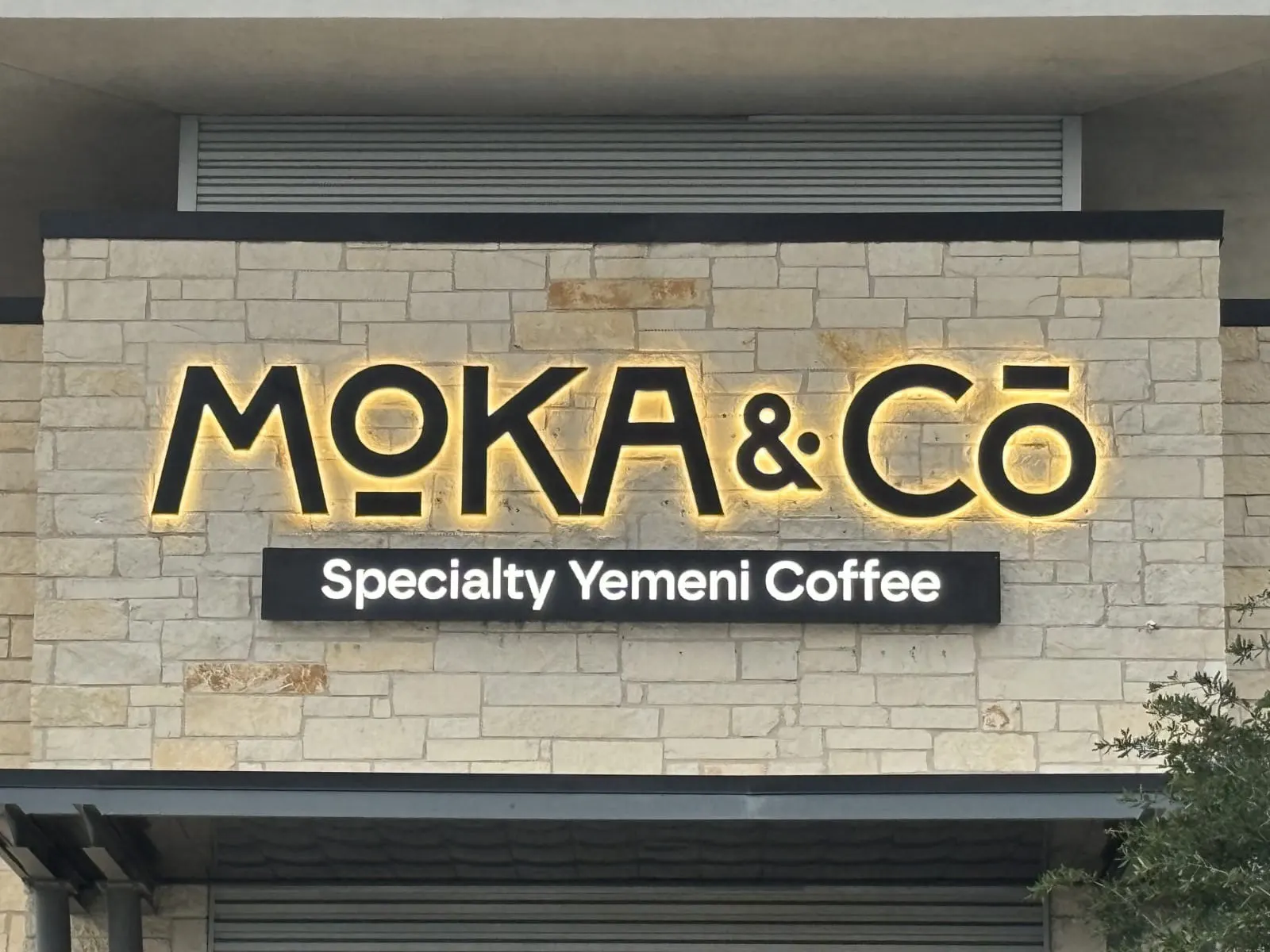
Individually built, LED-lit letters that turn a fascia into a nighttime landmark.
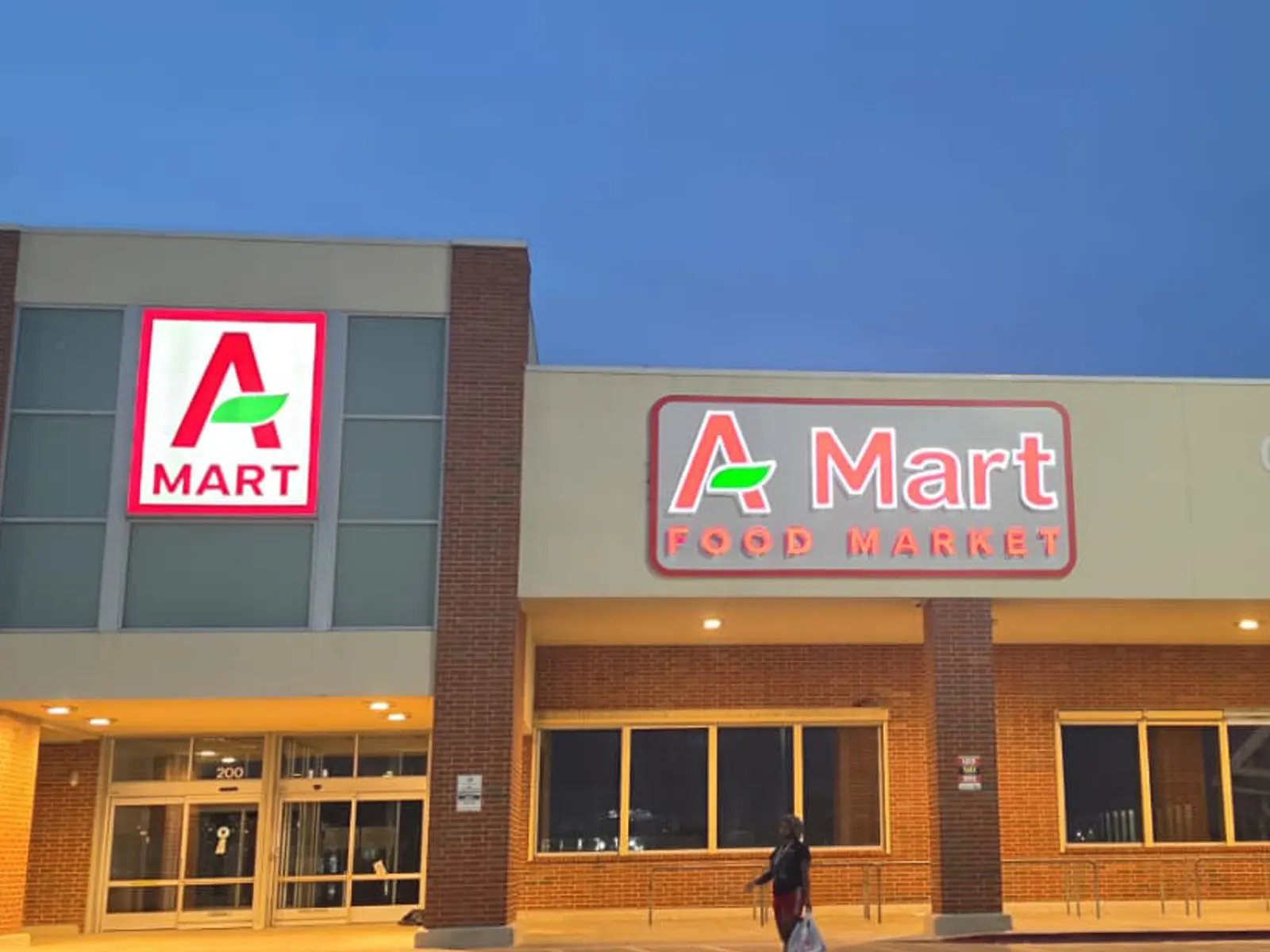
LED-lit letters, cabinets, monuments and pole signs that keep your name readable after sunset.
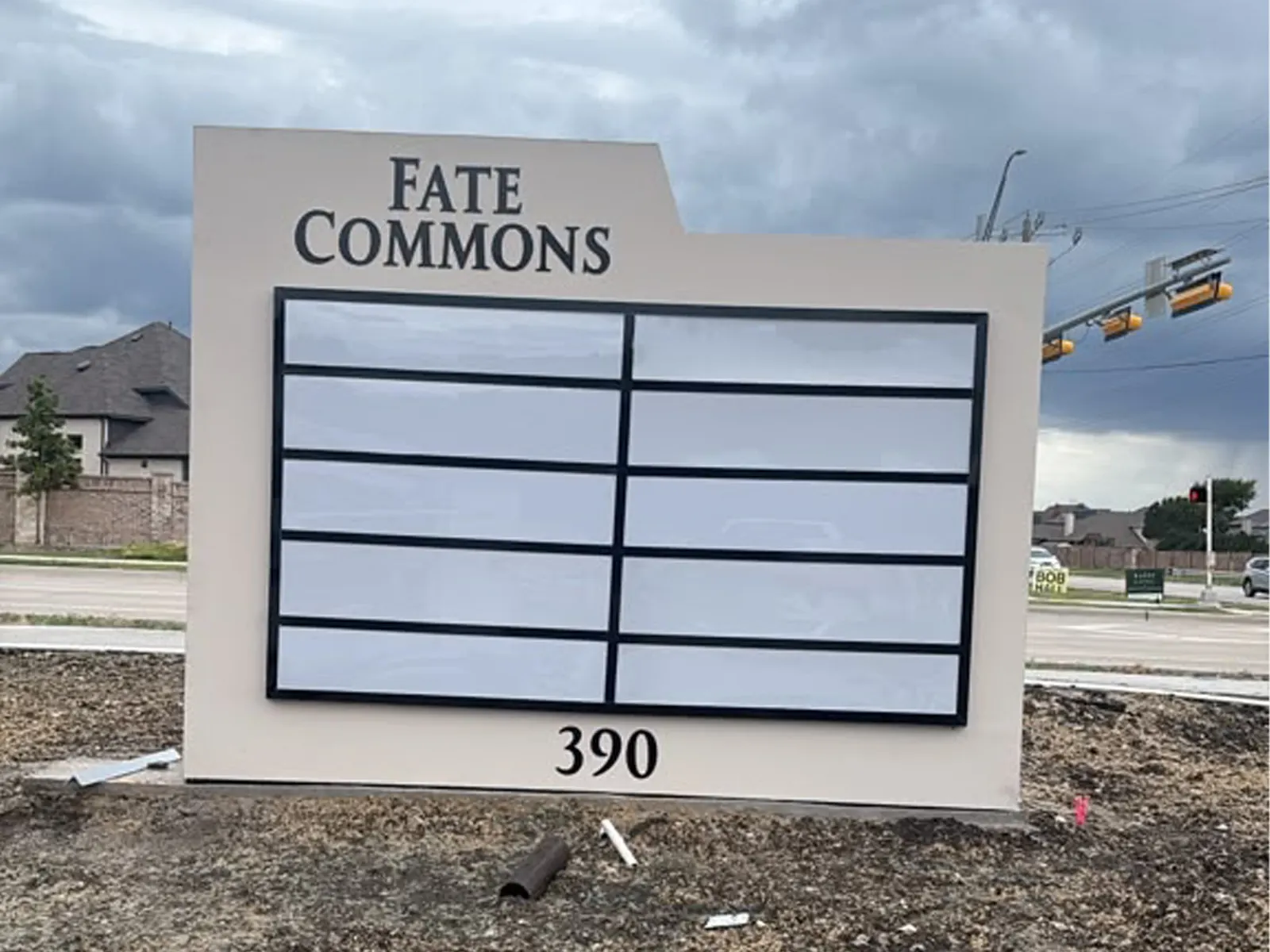
Low, freestanding signs that mark the entrance and match the architecture behind them.
Complete sign programs for retail centers, office and industrial properties, managed from survey to maintenance.
Start with the space. End with a landmark.
Tell us what you are building and where. We will help you choose the right sign system and handle the approvals, fabrication and installation.